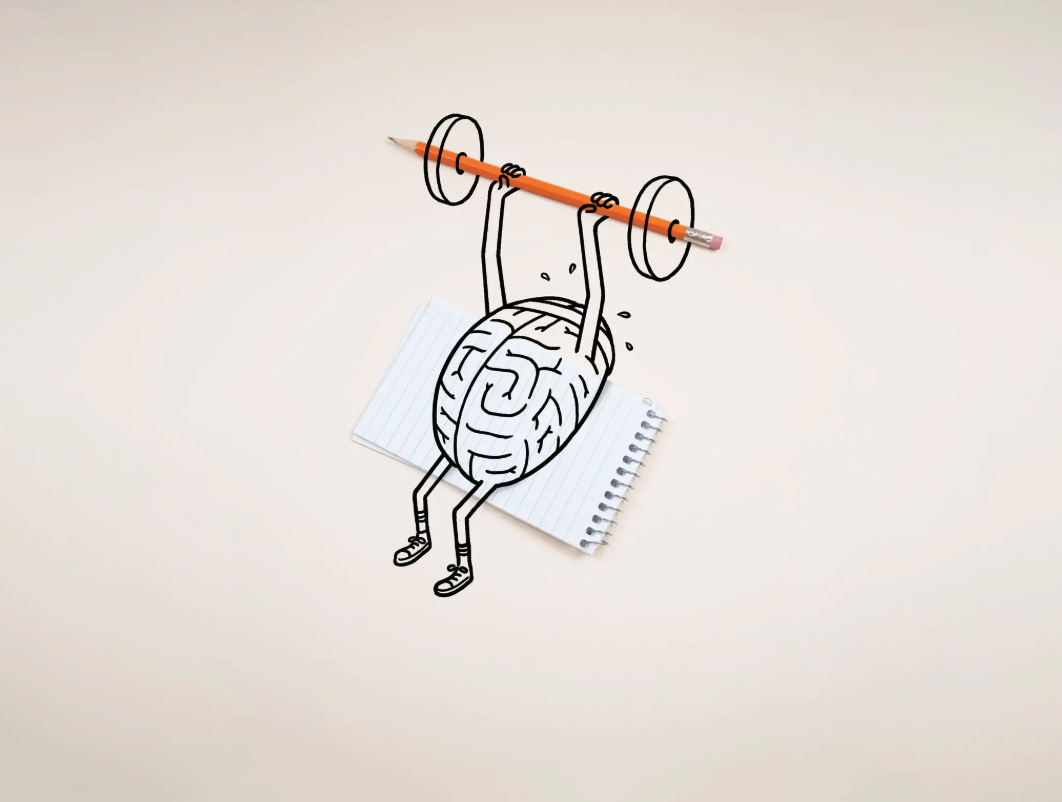
NAJ screen shot of a Christoph Riemann graphic
The Big Picture –
By Glynn Wilson –
COULTERVILLE, Calif. – Are we losing not just our attention spans but the ability to think deeply at all just in time for machines to take over?
Is it time for millions of us to die in war because the machine economy will not support us?
These are just two of the many questions running through my mind these days. I’ve been doing my readers a favor of late by writing less. Just so I could give everyone more time to think about what all is going on and how to deal with it, including myself. Even though it will cost me clicks, traffic and bucks, I’ve vowed not to inundate you with constant promotional updates that just distract you from the reading you should be doing, whether you want to face it or not.
After months of struggling to deal with my new digs in California, I’m on the verge of a breakthrough. I’ve long said it takes awhile to get fully oriented in a new place, even though I’ve done it so many times in my life I tend to be very good at it, and fast.
Before I get to the main thrust of this think piece, however, let me first report another local breakthrough of sorts.
But to understand this so you can follow along, first you have to know what a “think piece” is. So you have to see the American comedy drama film “Almost Famous,” which came out at the turn of the century in the year 2000.
It’s written as a semi-autobiographical story and directed by Cameron Crowe. It stars Billy Crudup, Frances McDormand, Kate Hudson, Patrick Fugit and Philip Seymour Hoffman, and tells the story of a teenage journalist, played by Fugit, writing for Rolling Stone magazine in the early 1970s, touring with the fictitious rock band Stillwater. He’s working on his first magazine cover story as a free-lance writer.
Or at least you need to watch this YouTube video about it. The “think piece” quote comes near the end.
Here’s the local breakthrough.
Last night at the Old Johnny Haigh Saloon on Main Street, a singer-guitar player named Jason brought in a Cajone, a wooden drum used to keep the beat in low volume settings like small bars where a full amplified band would blow the place out and ruin the conversational ambiance and atmosphere.
The bartender, Doc, has been encouraging me to get involved more in the music scene here, based on my experience, by providing some percussion. I tried sitting in a couple of weeks ago with a high-hat and snare drum. But it didn’t feel like the right thing. I told Doc what I needed was a Cajone.
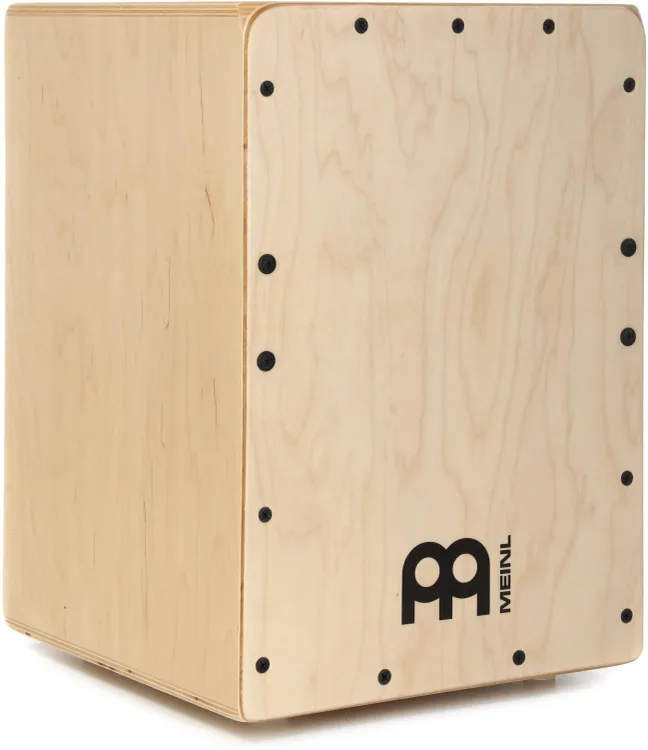
A wooden drum called a Cajone: NAJ screen shot
Ask the universe and sometimes one shows up.
As I got the feel of the wooden drum and the songs Jason was playing, and looked out at the faces in the crowd, I noticed something different happening.
Often at open mic events when someone is playing guitar and singing, there is a tendency to listen a little here and there but lose focus on the music as your attention span wanes. The sounds are often just background music for the conversation, which is fine and dandy if it’s a jazz trio playing low volume dinner music, or something similar.
I mean every amateur who picks up a guitar and sings a little is not exactly John Prine, who should demand your full attention when playing new original music in an auditorium like the Ryman in Nashville.
But when I found the groove on the Cajone, and the beat really started to click, everyone in the bar stopped talking and turned to face the stage and listen. It was the beat that grabbed their attention, and you can’t get that with two guys on guitar and a bass and drums backing track.
People started to move in their seats, and their faces seemed to light up. One woman holding a small dog got up and started dancing, and I noticed a couple of sad, lonely faces watching us play with rapt attention.
And believe it or not, we held their attention for a fairly long set of more than an hour. I took a couple of song breaks in that time from the drum, and noticed things went back to normal in the crowd. But when I got back up and started drumming again, the attention and energy came back.
There is a lesson in that.
How can you hold anyone’s attention these days in a world inundated by noise that passes for information?
Maybe add percussion?
Now back to the main story.
Cal Newport, a professor of computer science at Georgetown University and the author of “Deep Work,” thinks we’re rapidly losing the ability to think deeply at all. He just published a guest column in Friday’s New York Times.
There’s a Good Reason You Can’t Concentrate
“In 2016 my main concern was helping people find enough free time for deep work. Today I think we’re rapidly losing the ability to think deeply at all,” he writes, “regardless of how much space we can find in our schedules for these efforts. The data backs up this claim.”
That’s pretty scary stuff.
I’ve been keeping up with this research for years. If you search this site for the term “attention span,” you will get this.
76 search results for “attention span”
When Newport published his book Deep Work 10 years ago, he argued that email and instant messages were degrading our ability to concentrate on hard mental tasks. He recommended putting aside long stretches of time for uninterrupted thinking and treating this cognitive activity like a skill that you can improve through practice. The term “deep work” quickly entered the vernacular, and he started to hear people and companies use it without even realizing its source.
This was not my first experience with the phenomenon. I’ve been practicing it for many years as a journalist and writer. I mean how can you produce think pieces if you do not set aside a lot of time for reading and thinking?
That for me means watching no television, certainly not cable news, and very little listening to news on the radio. Low volume folk, classical or jazz music is different. I’ve been using that as background music for studying since my early undergrad days in college listening to WUAL in Tuscaloosa all day and night.
But the problems Newport focused on in Deep Work have been getting steadily worse, he says.
Research from Gloria Mark, a professor of informatics at the University of California, Irvine, indicates that our attention spans are about one-third as long as they were in 2004, with the biggest drops happening around 2012, which just happens to coincide with when Facebook went public and really started concentrating on grabbing and holding people’s attention – for profit.
Long-running surveys reveal that the share of U.S. adults who struggle with basic reading or math has risen markedly over the past decade, while the percentage of 18-year-olds who report difficulty thinking and concentrating jumped in the same period. A Financial Times article about these findings proposed a shocking but relevant question: “Have humans passed peak brain power?”
Many of these declines in cognitive skills became notable starting in the mid-2010s, exactly the period when smartphones became ubiquitous and the digital attention economy exploded in size. An increasing amount of research implies that this timing is no coincidence.
A meta-analysis released last fall showed that consuming short-form video content, as delivered by apps like TikTok and Instagram, is associated with poorer cognition and reduced attention, and the results of a clever experiment from 2023 found that the mere presence of participants’ smartphones in a room significantly reduced their ability to concentrate.
The growth of A.I. has brought new cognitive concerns, Newport reports. A study from January, based on surveys and interviews with more than 600 participants, revealed a “significant negative correlation between frequent A.I. tool usage and critical thinking abilities.” Another recent study, which tracked the brain activity of research subjects who were writing with the help of large language models, found that “brain connectivity systematically scaled down with the amount of external support.”
“The loss of our ability to think is a big deal,”Newport writes.
Close to 40 percent of the U.S. gross domestic product comes from so-called knowledge and technology-intensive industries, from aerospace manufacturing to software development to financial and information services. Companies in these fields alchemize advanced human thought into revenue.
“As we weaken our brains, we also threaten to weaken our economy,” Newport says. It’s notable that productivity growth in the private business sector stagnated during the 2010s, when technology became measurably more distracting.
“A diminished ability to use our brains also has concerning personal effects,” he writes. “Thinking is what lets us make sense of information in a complicated world.”
“Thinking is also an engine for making sense of our lives and cultivating our moral imaginations.”
He uses a number of political examples to make his points, from President Eisenhower to Lincoln. Then he points out that in 1956, as the Montgomery bus boycott careened into national prominence, Martin Luther King Jr. clarified his life’s purpose through a long session of quiet reflection one memorable night at his kitchen table, when he remembers his thoughts finally forming into a clear directive: “Martin Luther, stand up for righteousness. Stand up for justice. Stand up for truth.”
In an era when technologies relentlessly disrupt our lives, Newport says, it can seem that this cognition crisis is a fait accompli — a side effect of innovations that cannot be stopped.
But, he asks, “do we really have to accept this steady loss of our thinking ability as inevitable?”
In a short time, we transformed the way we thought about health, he says. He thinks we may be able to develop a similarly rapid revolution in how we respond to our diminishing ability to think.
I’m not so optimistic, but I like where he is going with this.
“What would such a revolution look like?”
In the world of physical health, we now know we should largely avoid ultraprocessed snacks like Doritos and Oreos, which are Frankenfoods made by reconstituting stock ingredients like corn and soy with hyperpalatable ratios of salt, sugar and fat, he points out.
“Much of the digital content that ensnares our attention in the current moment is also ultraprocessed, in that it’s the result of vast databases of user-generated content that are sifted, broken down and recombined by algorithms into personalized streams designed to be irresistible. What is a TikTok video if not a digital Dorito?”
He says we should consider taking as strong a stance against ultraprocessed content as we already do against ultraprocessed food.
Which is to say: “Most people should avoid these diversions most of the time. In the same way that you’re unlikely to eat Twinkies as a regular snack or still believe that Pop-Tarts provide a balanced breakfast, stop consuming ultraprocessed content. Don’t use TikTok. Don’t use Instagram. Don’t use X. Their sugar-high benefits aren’t worth the costs.”
There was a time when such a suggestion would have been considered eccentric and unworkable, he admits.
Governments can assist efforts to improve digital nutrition, he says, and cites the case of Australia recently enacting legislation banning social media use for kids under the age of 16. Regulators looked at the evidence and concluded that the potential harms (whether it’s heart attack risk or damaged mental health) far outweighed the benefits.
The United States should follow Australia’s lead in this regard, although that is highly unlikely to happen under the current administration in the White House or Congress. This will need to be changed in the next election cycle.
The media can also help here and there, by reframing coverage of social media as something that should be closely monitored, similar to such vices as alcohol and tobacco — substances we’ve learned to approach with caution.
Newport continues the physical health analogy by writing about our experience with exercise.
“The cognitive equivalent of aerobic activity is contemplation,” he writes, “the intentional focusing of your mind’s eye on a singular topic, with the goal of increased understanding. Just as the sedentary lifestyles that emerged in the mid-20th century degraded our bodies, our current lack of contemplation is degrading our brains.”
I think he is right about that.
What’s the equivalent of this cardio for our ailing brains?
“A good candidate is reading,” he says. “Making sense of written text exercises our minds in important ways.”
We develop what the cognitive neuroscientist Maryanne Wolf calls “deep reading processes” that rewire and retrain neuronal regions in ways that increase the complexity and nuance of what we’re able to understand.
“Deep reading is our species’ bridge to insight and novel thought,” she writes. Perhaps consuming a few dozen book pages a day should become the new 10,000 daily steps — a basic foundation of activity to maintain cognitive fitness.
Another way to exercise our brains is to reject the constant companion model of phone use, in which we keep smartphones on us at all times.
One solution to this constant companion problem: Spend more time with your phone out of easy reach.
“If it’s not nearby, it won’t be as likely to trigger your motivational neurons, helping clear your brain to focus on other activities with less distraction.”
Our institutions have a role to play here as well, as rules and regulations that reduce distraction in group settings can help support the strengthening of cognitive abilities, Newport claims.
In the wake of the success of the N.Y.U. psychologist Jonathan Haidt’s 2024 book, “The Anxious Generation,” many school districts around the country began banning smartphones from classrooms. These efforts have proved to be exceptionally fruitful. A 2025 working paper from the National Bureau of Economic Research found that school phone bans were followed by “significant improvements” in student test scores; similarly, three-quarters of the 317 high schools surveyed by a Dutch research team reported that phone bans improved focus, and two-thirds reported that they improved the “social climate” in their school.
Generative A.I. introduces its own set of challenges, especially when the technology intersects with our professional lives.
In September a splashy article in Harvard Business Review reported on the rapid rise of “workslop,” which the authors defined as “A.I.-generated work content that masquerades as good work, but lacks the substance to meaningfully advance a given task.”
The result is a contradiction: “While workers are largely following mandates to embrace the technology, few are seeing it create real value.” A recent study conducted by researchers at the Boston Consulting Group found that offloading difficult tasks to A.I. led to increased mental exhaustion — a state they called “brain fry” — because of the constant context switching required to monitor and manage the A.I.’s behavior.
Why would we use A.I. in ways that ultimately make work more draining? My suspicion is that we often deploy these tools not because they make us better at our jobs but because they help us to avoid moments of sustained concentration. It’s hard to confront a blank page, so why not coax a mediocre draft of that planning document out of a chatbot?
“The problems I describe here are only going to get worse,” Newport says. “To stave off disaster, we need a full revolution in defense of thinking, launched against the digital forces seeking to degrade it.”
The key to this transformation is action. In the half-century that followed Eisenhower’s heart attack, age-adjusted death rates from cardiovascular disease fell by 60 percent, creating what one academic study called “one of the most important public health achievements of the 20th century.”
Meanwhile, exercising has become so common as to become unremarkable. There are now more than 55,000 gyms and fitness studios in the United States alone — a reality that would have been unthinkable during the sedentary age before the publication of “Aerobics.” But Dr. White’s briefings and Dr. Cooper’s book were not enough on their own to create this transformation. It was the collective action in the wake of these events that ultimately mattered more.
On the Community Level
Now back to the community level and the issues in front of us here.
Since arriving in this Gold Rush town where one of the founders of American conservation John Muir traveled to and from Yosemite Valley and urged President Teddy Roosevelt to expand U.S. protections for American forests and to create more national parks, I’ve had my share of revelatory breakthroughs. Just by sitting here in the California sunshine this fall, winter and spring, doing some online research, and by looking objectively and talking to folks.
There was a time in this country when the thoughts of an objective new observer were welcomed. Of course there is always the distrust of a new comer to a community, along with the fear and resistance to any change in the status quo. But few here would argue with the notion that something needs to be done to revitalize this place that is on the verge of becoming another Western Ghost Town.
One of the first things I noticed was that no one here had thought of how to promote this John Muir Highway as the original and best entrance to Yosemite National Park. Most of the attention goes to Mariposa or Groveland. This is actually quite brilliant, if you stop to watch, listen and think about it long enough.
I expressed some good ideas in an original radio broadcast that will serve as a model for my morning radio show when we get on the air full time with funding.
Good Morning Coulterville! Premiere Broadcast
How to help some of the local businesses is on the agenda, and we have some plans for that, including more networking with musicians through the Haigh Saloon and producing an A.I. promotional video for the other bar in town, the Crazy Coyote Saloon. (This will be revealed soon).
We are working on a plan to save the local VFW as well, and to cover stories like the traveling model of the Vietnam Veterans Memorial Wall which will be housed around here. (Another story we are planning to cover soon).
Meanwhile, without getting all involved in one local controversy, let me just hint that one definite change is coming soon. More arts and crafts in town and less cheap, used, redneck junk.
I’m building birdhouses and walking sticks, and soliciting other crafts people to become more involved here. You will see these results soon as well.
So keep spending more time reading, thinking and writing yourself, and let’s work on making this world and this community a better place. The chance of ultimate disaster is always great these days. But at least we can spend the time to think and try.
___
If you support truth in reporting with no paywall, and fearless writing with no popup ads or sponsored content, consider making a contribution today with GoFundMe or Patreon or PayPal.