Glynn Wilson
The Big Picture –
By Glynn Wilson –
WASHINGTON, D.C. – Do you feel it now?
Is the world changing fast enough for you to actually feel it?
Are you reeling from it? I keep up with this stuff and I can honestly say yes, I am feeling it.
Maybe you didn’t believe me (or even know of me or read me) back in 2011 when I wrote an essay on the inevitability of the Accelerating, Exponential Rate of Change in Society, and what some techno-geek philosophers were calling “The Singularity,” a technological change so rapid and profound that it represents “a rupture in the fabric of human history.”
This might also be called the end of the world (at least as we know it).
In 2011, 14 years ago, when I first took on this question in the polluted wake of the BP Gulf Oil Disaster in 2010, I asked: “Can the pace of technological progress continue to speed up indefinitely? Is there not a point where humans are unable to think fast enough to keep up with it?”
Some then would say that we cannot comprehend the Singularity, at least with the current level of understanding at the time, and that it is impossible, therefore, to look past its “event horizon” and make sense of what lies beyond.
Well enough change has happened since then that we can stop the clock for a few minutes to talk about some of the changes apparent right before our very eyes.
Back then the Washington Post was kicking ass and taking names and beating The New York Times in many ways, having finally capitalized on changes in publishing on the web and becoming a national and international newspaper online. Contrary to what some people, including communications faculty members at Loyola University New Orleans thought when we got into an argument about it in a faculty meeting in 2002, the Post was never a national newspaper in print. The Graham family never invested in regional printing plants or local distribution networks around the country outside the Washington, D.C.-Maryland-Virginia area like the Times, The Wall Street Journal and USA Today. It was a local newspaper in print until the internet came along and allowed the digital paper to reach a larger audience online.
By 2005, the beginning of the blogging era when I went independent online, the Times was losing money. Editor Howell Rains of Alabama had been fired during the Judi Miller and Jayson Blair scandals, and author and correspondent Rick Bragg had quit.
The staff tried a paywall from 2005 until 2007, but it never worked right. Then the Bush Great Recession hit, and even Newhouse papers like The Birmingham News began sputtering until they could no longer afford to put out a print edition. In spite of a promise by the Newhouse family never to lay off staff due to changes in technology, they offered retirement buyouts to most of the staff, including the highly paid publisher and editor. Same for the Mobile Press-Register and the Huntsville Times. They eventually even lost the Times-Picayune in New Orleans, and the Cleveland Plain Dealer in Ohio.
The end of the great run and era for the Post was foreshadowed in October 2013, when the Graham family sold the newspaper to Nash Holdings, a company owned by Amazon founder Jeff Bezos, for $250 million. Not long after that the online only Huffington Post sold to America Online (AOL) for more, $315 million. That was a real shocker at the time. It was the first publication to capitalize on the early traffic from sharing news links on Facebook, before it went public in 2012, changed the company name to Meta, and reprogrammed the bots and the algorithm to downplay news.
From then until February 28, 2021, when perhaps the last great newspaper editor Marty Baron retired, the Post was still giving the Times a run for its money, at least in covering politics in D.C. and the science of the environment.
But according to a story in the Columbia Journalism Review published today, Monday, Aug. 4, 2025, the question seemed legitimate: The Exodus from the Washington Post: Is the storied paper dying?.
Questioned on all this by staff, Will Lewis, the paper’s CEO, reportedly told them that the paper was “hemorrhaging both readers and money,” adding, “I can’t sugarcoat it anymore.” A few months later, Bezos intervened to block the opinion section from endorsing Kamala Harris over Trump for president, and characterized the decision as being about “reader trust.” But the timing, which he conceded was not ideal, looked to many readers like a sop to a man who could soon become president, and hundreds of thousands of them canceled their subscriptions in an apparent act of protest (including me).
Of course there are all kinds of articles out there about the ongoing problems at the Los Angeles Times, which has been down and out for years. So what does that leave?
I guess you could say The Wall Street Journal is still there, but of course it has been owned for years by Rupert Murdoch, the same right-wing, British tabloid guy who owns Fox News. I guess there is still a USA Today online, but it got bought out by the right-wing Gatehouse Media, so there goes that neighborhood.
We recently reported on all the news outlets capitulating to king-dictator Trump, including NPR and AP.
American Crisis 2025: Media Capitulation
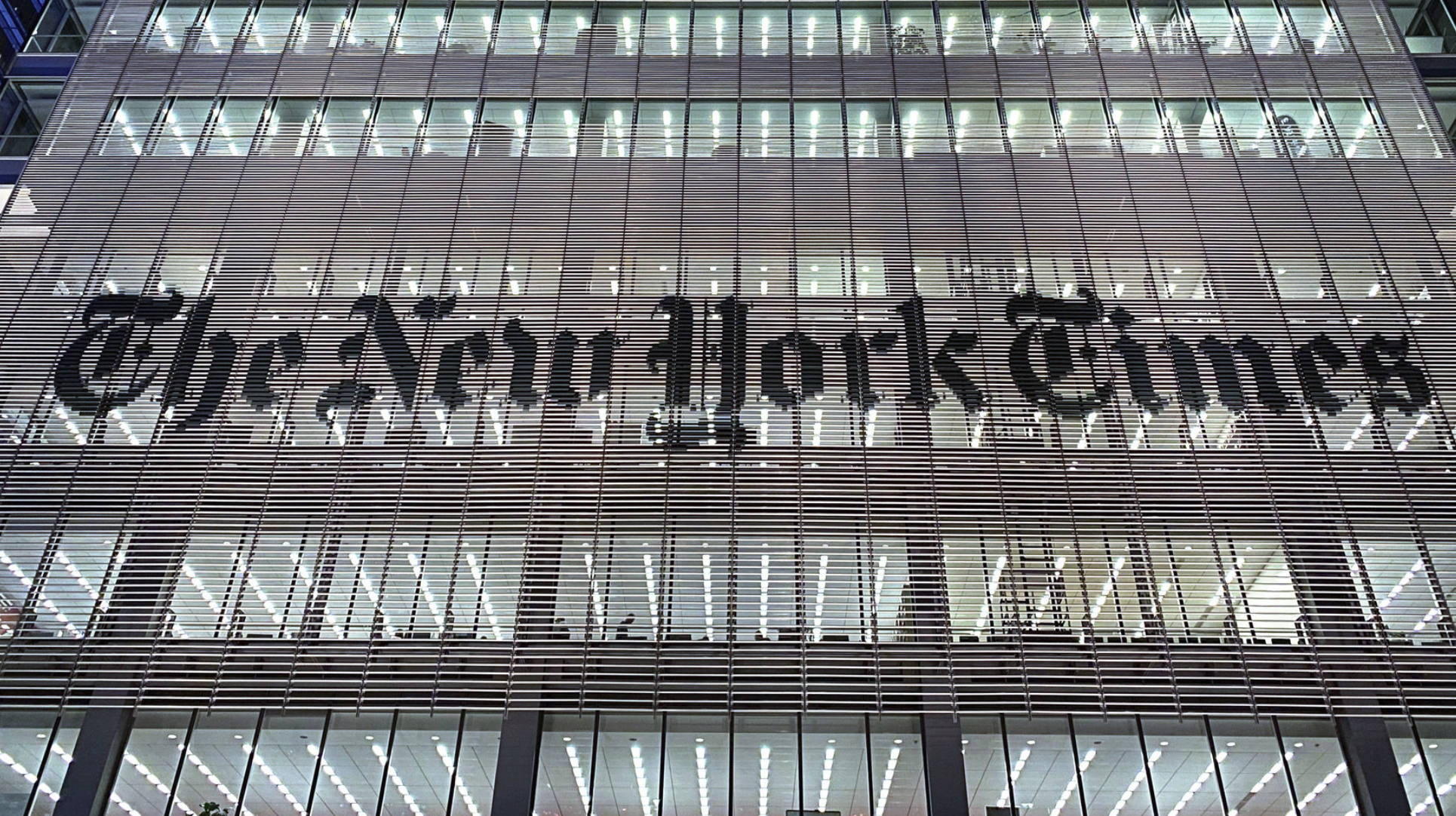
So that basically leaves Bloomberg News, which nobody can afford to read behind its expensive paywall. And The New York Times as arguably the last of the great American newspapers.
Look, the last thing I want to do is say I told you so, because of the consequences for democracy. But I did warn people as far back as the year 2000 in an address at Birmingham Southern College’s annual writing conference.
A Web Published Talk on Electronic Publishing in 2000
My advice today for the Post is simple. Take down the damn paywall and go free online and start taking on Trump aggressively, and you may get some of your readers back. Give me a call and pay me big bucks and I might even come downtown and help you.
But of course they won’t do that, because they have always been an arrogant bunch of Ivy League, bow tie wearing pricks. So if it does go down, while I will see it as a blow to the American press and democracy, I will not cry too much, especially since they’ve screwed me in the past and rebuffed my offers to help a couple of times before.
A few years ago when they were trying to expand their network of freelancers and I was still reporting on many stories out of the South after Doug Jones had been elected to the Senate from Alabama, I applied and got a hearing thanks to photo editor Mark Miller, who I had worked with at The Crimson White in Tuscaloosa back in our college days. But the woman who was assistant editor of their so-called “Talent Network” ultimately turned me down because I publish editorial columns on my website. Duh. So do they.
I found out she had been the pet section editor of The Dallas Morning News before being hired by the Post. I wrote regional news features for the Dallas Morning News for years out of New Orleans and had great clips. I don’t even think she read them. It was better than anything she had ever done in her career.
When I was living in New Orleans and reporting for the Dallas paper and the Times, I wrote editor Ben Bradlee a letter telling him I was planning to move to Washington and would like to discuss working for the Post. He called me back one day, and said to come see him when I got into town. But when I did move here in the spring of 2004 and dropped off a package of clips at the office, they never called me back or agreed to interview me for a job. Time magazine did hire me as a freelancer.
The next year, a gossip columnist totally lied in a story about my lawsuit against Kitty Kelly, who ripped off my Bush AWOL story verbatim in her book on the Bush family “Dynasty.” In fact, my story was in many ways the lynchpin of her case against George W. Bush.
George W. Bush’s Lost Year in 1972 Alabama
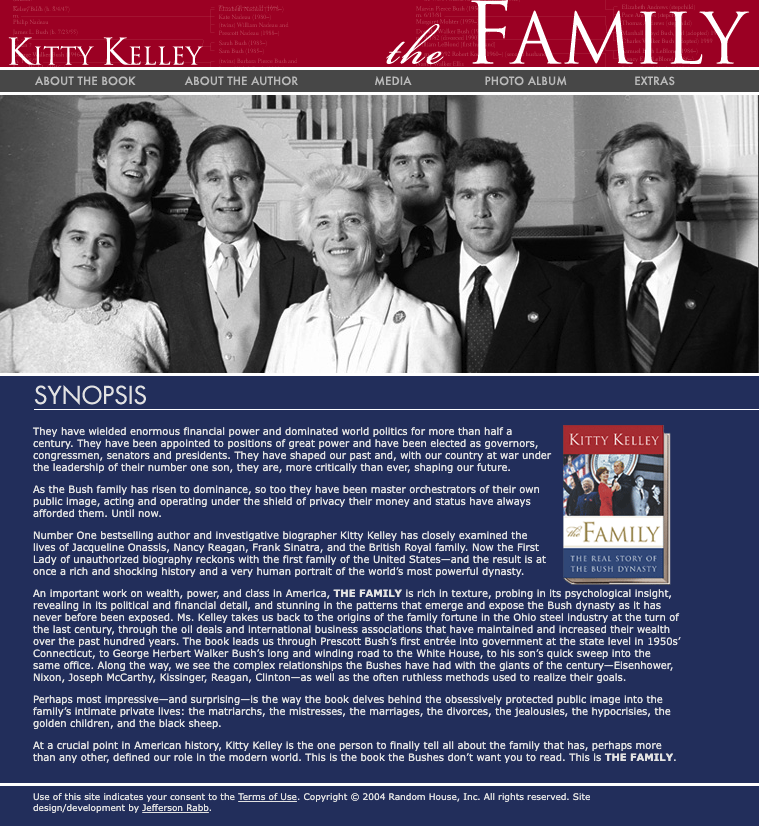
NAJ screen shot
The New York Times did the story justice: A Writer Is Suing the Author of a Hit Book on the Bushes.
But when I decided to drop the case before it went into the courtroom for a hearing that could have set a bad precedent for writers and publishers on the web then, the Post screwed the pooch. This story is not even close to being accurate, and I not only told them what the situation was, I talked to the editor who handled the story after it came out and she admitted that they let Kelly off the hook for plagiarism in a gossip column.
Kitty Kelley Wins a War of Words
The real, factual story was this. The media attorney I found in Birmingham to handle the case filed the lawsuit prematurely. I asked him to write the publisher a letter asking for a full of acknowledgement of my story – which was by the way credited with a link in the end notes, but not in the text – and some compensation. It was registered with the Library of Congress with a copyright certificate, after the book was published and another attorney noticed the theft.
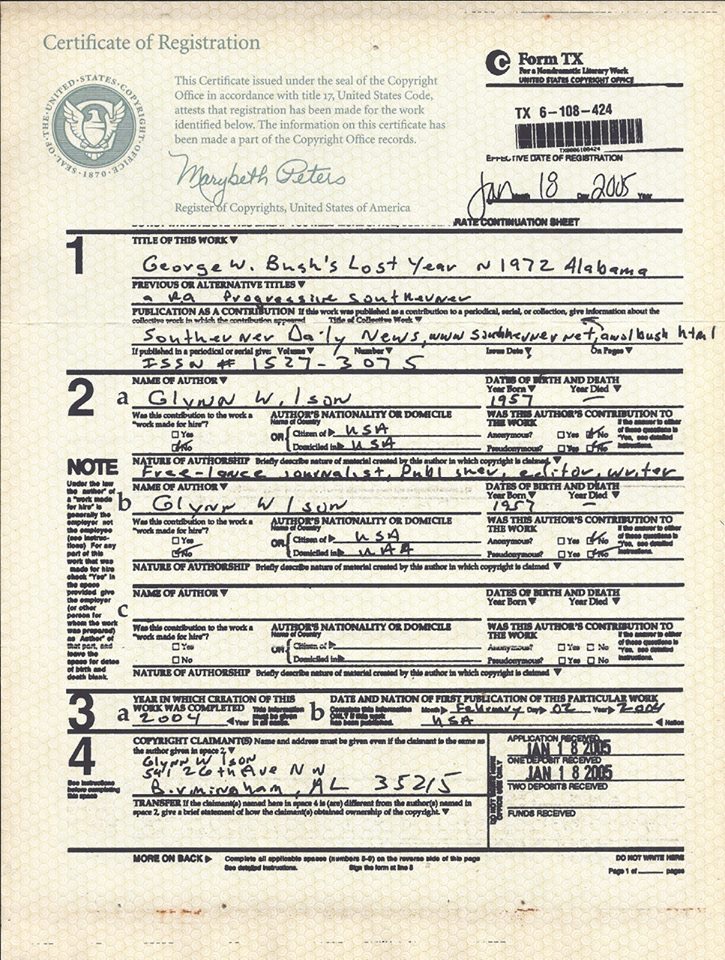
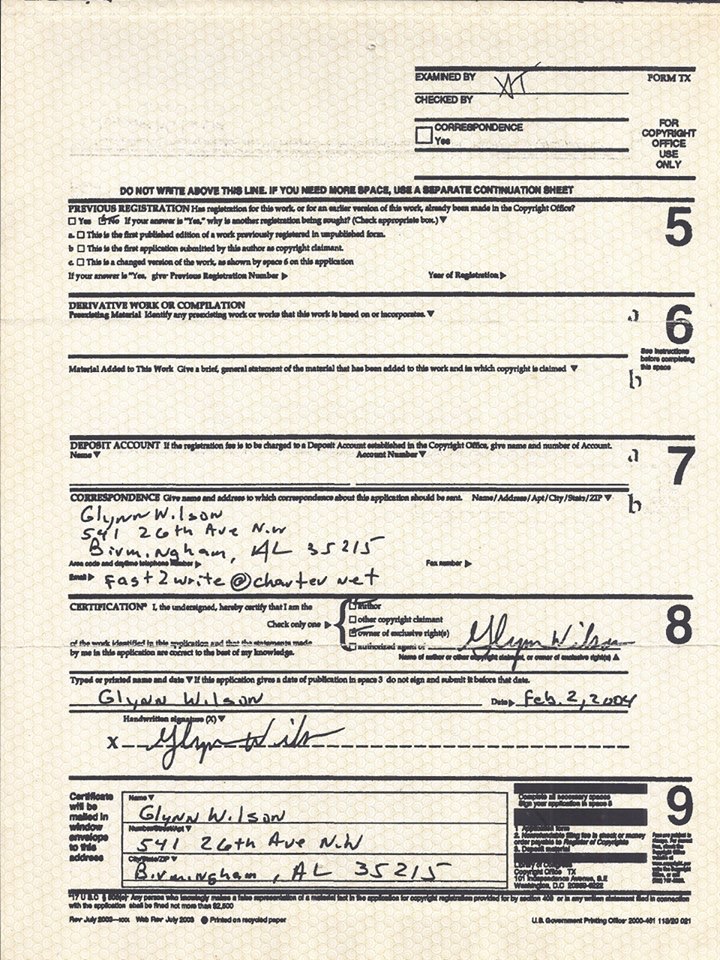
He wrote the letter giving the publishing company 10 days to respond, and when he got no answer on that deadline, he went ahead and filed the lawsuit. I can’t say it was totally without my permission, since I did sign a contract with him to file a suit if the company did not acknowledge the plagiarism and agree to some compensation. I mean they paid her an $8 million advance for the book. I was just looking for a few bucks and full credit for the story.
A couple of days before the hearing, which was scheduled before Justice U.W. Clemon in federal court in Birmingham, my lawyer called and told me we were going to lose the case because the legal team for the other side, the publisher, showed him precedents in federal court that indicated that to bring a successful copyright violation lawsuit, my story would have had to be registered BEFORE the book was published. But that was absurd on the face of it, because nobody publishing on the web then was printing and mailing stories to the Library of Congress and paying a $30 fee for stories published with the new blogging software. That would have been cost prohibitive to say the least.
At that time the Post was still arrogantly thinking they would be publishing in print forever, even unwilling to acknowledge that publishing on the web was their ticket to a larger, wider audience. They had not figured out yet how to make enough money online to pay the staff.
So I will offer to help one more time. If I am ignored again, fuck ’em. I mean they are losing $100 million a year now. How long will Jeff Bezos keep dumping money down the drain to keep it going?
Washington Post lost $100 million last year amid staff shakeups, WSJ reports
Meanwhile the Times is still reporting revenue increases and profits. Adjusted operating profit increased nearly 28 percent in the second quarter of 2025, to $133.8 million.
New York Times Revenue Jumps 9.7% From Subscriptions and Ads
___
If you support truth in reporting with no paywall, and fearless writing with no popup ads or sponsored content, consider making a contribution today with GoFundMe or Patreon or PayPal.