Have their differences been overstated? –
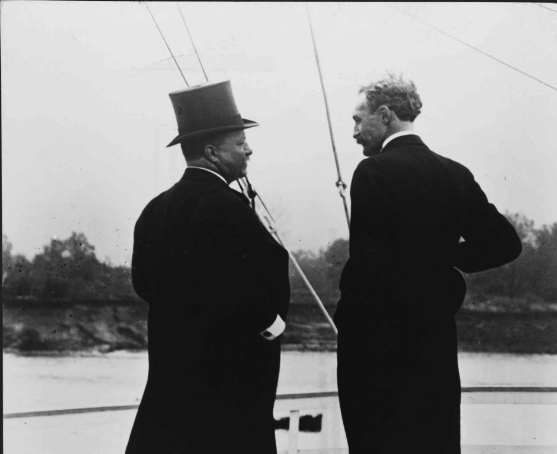
Gifford Pinchot, the first chief of the U.S. Forest Service, with his friend Theodore Roosevelt in 1907: NAJ screen shot
EDITOR’S NOTE – The National Endowment for the Humanities, funded in a bipartisan way by Congress, is under threat from the Trump administration like many agencies, history and science itself. Back in April, when Elon Musk invaded the administration and created the Department of Government Efficiency (DOGE), hackers with no knowledge of how the government actually works began willy nilly terminating grants from the Endowment to thousands of groups across the country including humanities councils, museums, historic sites, archives, libraries, educators and media outlets. In May, Oregon Humanities and the Federation of State Humanities Councils sued the endowment and DOGE, alleging the sudden grant cuts were an “attempted destruction, spearheaded by DOGE, of the congressionally established federal-state partnership.”
A federal judge ruled in August that the government’s abrupt elimination of humanities grants previously approved by Congress was “unlawful” and that a lawsuit brought by humanities groups can move forward. In his decision, U.S. District Judge Michael H. Simon wrote that the councils were “likely to succeed on their claim that the withholding of the funds at issue in this case is unconstitutional.” He added, “The United States Constitution exclusively grants the power of the purse to Congress, not the President.”
“Federal funding for the arts and humanities has enjoyed bipartisan support for decades, with Congress continuing to strengthen the statutes governing NEH and provide stable funding generation after generation,” Simon wrote.
Phoebe Stein, president of the Federation of State Humanities Councils, in a statement called the judge’s ruling “excellent,” but cautioned that “humanities councils are still operating without their Congressionally appropriated funds, and many have already laid off staff and cancelled vital programs as a result.”
In July, a New York federal court similarly found that the government violated the law when it canceled humanities grants that had already been awarded. It said that the grants should be reinstated until after the case has been tried.
In support of this work, and our own, we republish this article with permission today, as editor and publisher Glynn Wilson will be on his way to California soon to work on telling this and related stories himself.
By Lukas Keel –
MONTANA – In the 1890s, America faced an environmental crisis. In the mountainous West, land set aside for homesteading sat unclaimed, too distant and treacherous for prospective farmers, and entirely unprotected by the government. Sheep roamed across these unclaimed lands, clearing grass for miles. Corporations bought up entire forests for lumber. Many feared that we were headed for a timber famine in the next twenty years.
In 1896, the National Academy of Sciences created a National Forest Commission, tasked with researching and reporting policy recommendations for the administration of America’s forests. The commission took a four-month tour of the American West, surveying and ultimately recommending that the government assume protection of more than 21 million acres of forest across 13 reserves. On this trip were Gifford Pinchot, a young forester who would eventually become the first chief of the U.S. Forest Service, and John Muir, the most famous naturalist in American history.
The two have come to embody the conflicting philosophies at the heart of the American public land system: preservation vs. conservation. For Muir, nature was God, best preserved far from the degrading touch of man. For Pinchot, nature was a resource that ought to be sustainably shared among the most people possible. These opposing views might have made the two men natural enemies.
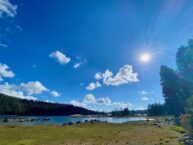
But camped together beside jewel-like Lake McDonald in what would become Glacier National Park, they took a liking to each other. They fished together and talked long hours into the night. They respected each other, and acknowledged their shared appreciation for the natural world. They formed an alliance around the belief that natural places like Lake McDonald were important enough for the federal government to permanently own and manage.
The story of these two icons of American environmentalism is told in John Clayton’s book Natural Rivals: John Muir, Gifford Pinchot, and the Creation of America’s Public Lands. The book confronts the common historical narrative that Muir and Pinchot were enemies, their relationship defined by their battle over the creation of the Hetch Hetchy Dam in Yosemite.
In 1908, Theodore Roosevelt’s Department of the Interior granted San Francisco the authority to dam the Tuolumne River in Hetch Hetchy Valley for use as a reservoir. For Pinchot, a close friend and adviser to the president, this was an obvious choice. San Francisco’s water system could not adequately serve its growing population, and the dam presented a solution. For Muir, damming Hetch Hetchy was a blasphemy. You might as well deface the world’s great cathedrals, he said, “for no holier temple has ever been consecrated by the heart of man.” The issue was decided in December 1913, when Woodrow Wilson signed the Raker Bill into law, authorizing the dam’s construction. Muir would die just over a year later, and many would define Hetch Hetchy as the tragic climax of his life.
Years before Hetch Hetchy, the two men were friends. They wrote letters to each other regularly. Muir deeply inspired Pinchot, who in turn helped influence Muir’s writing. One freezing night on the commission trip, the two talked until midnight, huddled around a campfire on the south rim of the Grand Canyon. Pinchot wrote that the men felt like “guilty schoolboys” the next morning, returning to their hotel to assure their travel companions they hadn’t fallen into the chasm. “It was such an evening as I have never had before or since.” This friendship was critical to the success of the National Forest Commission.
The commission reported their recommendations to President Grover Cleveland in 1889, engulfing Cleveland, Pinchot, and the rest of the commission in a political firestorm. Mining and logging interests railed against the plan. Western states accused Cleveland of an imperialist land grab. Pinchot fought these fires in Washington. He lobbied congressmen, compromised with logging and mining companies, and argued for a forest system in which these disparate groups could jointly pursue their interests.
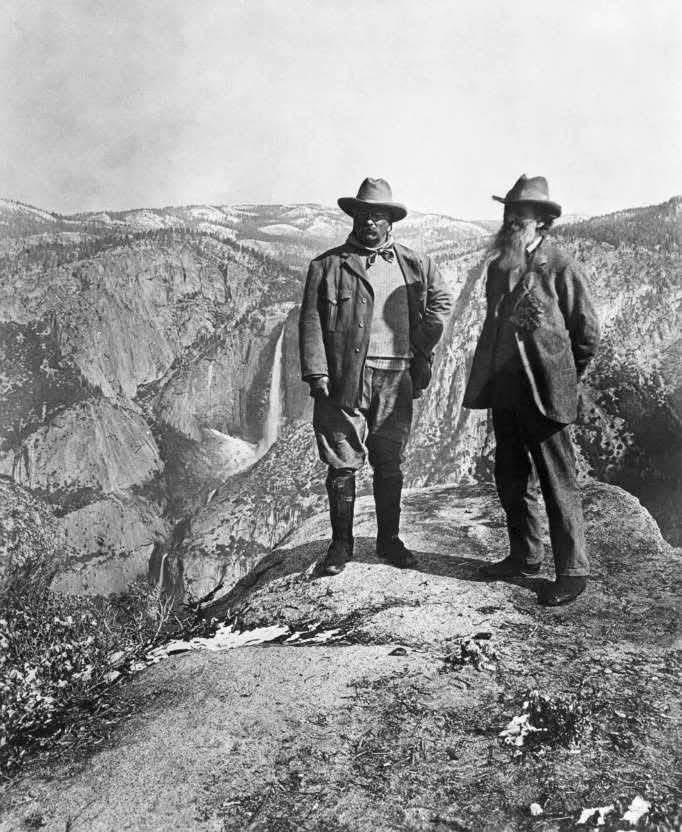
President Teddy Roosevelt with John Muir while camping in Yosemite Valley in 1903: NAJ screen shot
Muir fought in the pages of the Atlantic and Harper’s Weekly. He connected the new forests to his beloved national parks, he wrote of God in nature, he compared the commission’s congressional opponents to yellowjackets in a horse’s ear. In these magazines he articulated the diverse system that we now understand as “public lands,” a system that combines the preservation of national parks like Yosemite with a system of forests, protected by the federal government but open to every American’s use. This, a system joining preservation with conservation, was the result of his alliance with Pinchot. Muir argued that “every remaining acre of unentered forest-bearing land in all the country . . . should be reserved, protected, and administered by the Federal Government . . . forever.”
Ultimately, after Cleveland threw out a congressional bill to withhold appropriations for the Forest Commission’s new reserves, the issue landed at the feet of President William McKinley. He would sign what is known as the 1897 Organic Act into law. This law clearly proclaimed that the federal government, following the Forest Commission’s recommendation, would preserve new public lands “for the use and necessities of citizens in the United States.” It clearly states the conservationist theory of land management, the legacy of Pinchot’s work with the Forest Commission. This set the groundwork for the creation of the U.S. Forest Service in 1905, which Pinchot would head.
Today, the National Park and U.S. Forest Service embody the legacy of Muir and Pinchot’s alliance. On U.S. Forest Service land, the interests of mining and lumber companies are balanced with the recreational pursuits of hunters, snowmobilers, and cross-country skiers. In national parks, preservation reigns king, the natural world kept, as best it can be, in its natural state. As Clayton writes, the 1897 act and Muir’s Atlantic and Harper’s pieces are as much a climax to the Muir-Pinchot story as Hetch Hetchy. Yet we tend to focus on the latter, the story that pits Muir and Pinchot against each other. Clayton suggests that we are drawn to this conflict because its two characters embody deep conflicts within the American experience. Muir was an immigrant, an evangelist, an individualistic outsider. Pinchot was a blue blood, a Puritan, a community-oriented insider. They were introvert and extrovert. Amateur and professional. West and East. Their rivalry spoke to rivalries at the core of the American experience.
At a series of book talks, supported by Humanities Montana, Clayton has found that these conflicts still resonate deeply with audiences. “People sort of tend to lean one way or another. If you’re a poet, if you’re religious or spiritual, or you’re an artist, you’re probably a Muir person. And if you’re an engineer or a manager, or if you’re interested in fairness or democratic processes, you’re probably a Pinchot person.” And yet, for Clayton, these differences deepen the story of the two men’s cooperation as much as their rivalry. Their distinct skills and conflicting views proved complementary, helping define the diversity of the American public lands system.
About the author
Lukas Keel was an intern with Humanities magazine.
The text of this article was republished with permission, originally published as “Friends of the Land: John Muir and Gifford Pinchot” in the Winter 2020 issue of Humanities magazine, Volume 41, Number 1, a publication of the National Endowment for the Humanities.
___
If you support truth in reporting with no paywall, and fearless writing with no popup ads or sponsored content, consider making a contribution today with GoFundMe or Patreon or PayPal.