



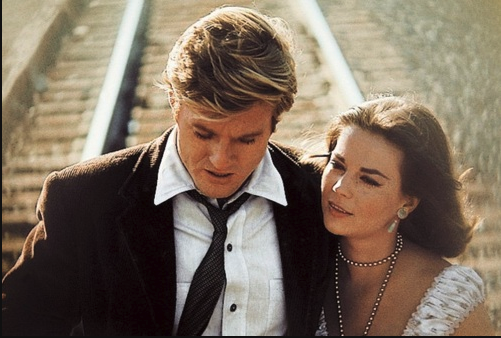
Editor’s Note: We don’t review that many movies here, only the ones we think hold historical and/or literary significance. This week, we found two interesting movies on streaming services to talk about, “Papa: Hemingway in Cuba” and “This Property Is Condemned,” starring Robert Redford and Natalie Wood.
Movie Night –
By Glynn Wilson –
Maybe I’m too young to remember movies from 1966, since I was only 9 years old at the time. I remember seeing movies like “Gone With the Wind” and “The Love Bug” at the historic Alabama Theater in Birmingham, and “Billie Jack” at the Capri Theater in the suburbs. But thanks to movie streaming services, our nightly entertainment viewing can include watching older movies as well as newer ones.
So it was that this week, I watched two movies I had not seen before in theaters or on cable TV. I didn’t even recall that Robert Redford had starred alongside the great Natalie Wood back when. You may recall her tragic and controversial death when she drowned in the Pacific Ocean in 1981.
“This Property Is Condemned” is an American drama film directed by Sydney Pollack and stars Natalie Wood, Robert Redford, Kate Reid, Charles Bronson, Robert Blake and Mary Badham. The screenplay, inspired by the 1946 one-act play of the same name by Tennessee Williams, was written by Francis Ford Coppola, Fred Coe and Edith Sommer. It was released by Paramount Pictures in 1966.
The Depression-era story takes place in the fictional town of Dodson, Mississippi. Owen Legate (Redford), a representative of the railroad that provides much of the economic base for the town, comes to Dodson with an unpopular mission: to cut back on railroad workers during the Great Depression in the 1930s. Wood plays Alva Starr, a pretty flirt who finds herself stuck in the small town (a common story). While the boys in town are after her affections, she is attracted to the handsome stranger, even after he completes his task to put many of the men in town out of work and to close the boarding house run by her mother, Hazel “Mama” Starr (Kate Reid).
Wood received a Golden Globe nomination for Best Actress in a Motion Picture Drama for her performance. The film itself received mixed reviews. It is noted for its song “Wish Me a Rainbow,” written by Jay Livingston and Ray Evans, which is heard at the beginning and the end of the film. Ed Ames, Astrud Gilberto and Lawrence Welk also covered the song.
The film begins and ends on the railroad tracks in Dodson with Alva’s younger sister Willie Starr (Mary Badham, who also played Scout in “To Kill a Mockingbird”) telling the story of her sister Alva. While most of the men in town seek the affections of Alva, she falls for Owen and eventually follows him to New Orleans, where they have a brief love affair. He falls in love with her and asks here to marry him when he is offered a job in Chicago.
(Spoiler Alert)
But Mama Starr shows up and ruins everything when she reveals that she is already married. Alva freaks out and runs off into the rain in the French Quarter, crying.
Willie finishes telling the story on the railroad tracks in Dodson, where she still lives in the old boarding house, now condemned property. Mama left town with a man headed for Memphis. Wearing her older sister’s clothes and jewelry, Willie explains that Alva died of infected lungs. This was foreshadowed early in the film when she has trouble catching her breath.
Even though some critics panned it at the time, in retrospect it is a one of those films that artfully depicts what life was like during the Great Depression. The scenes in New Orleans and on Bourbon Street remind me of my time there. Check it out on Amazon Prime Video.
Wikipedia: This Property Is Condemned
The movie reminds us of another film made from a Tennessee Williams play set in New Orleans, “A Streetcar Named Desire” starring Vivien Leigh, Marlon Brando, Kim Hunter and Karl Malden.
Papa: Hemingway in Cuba
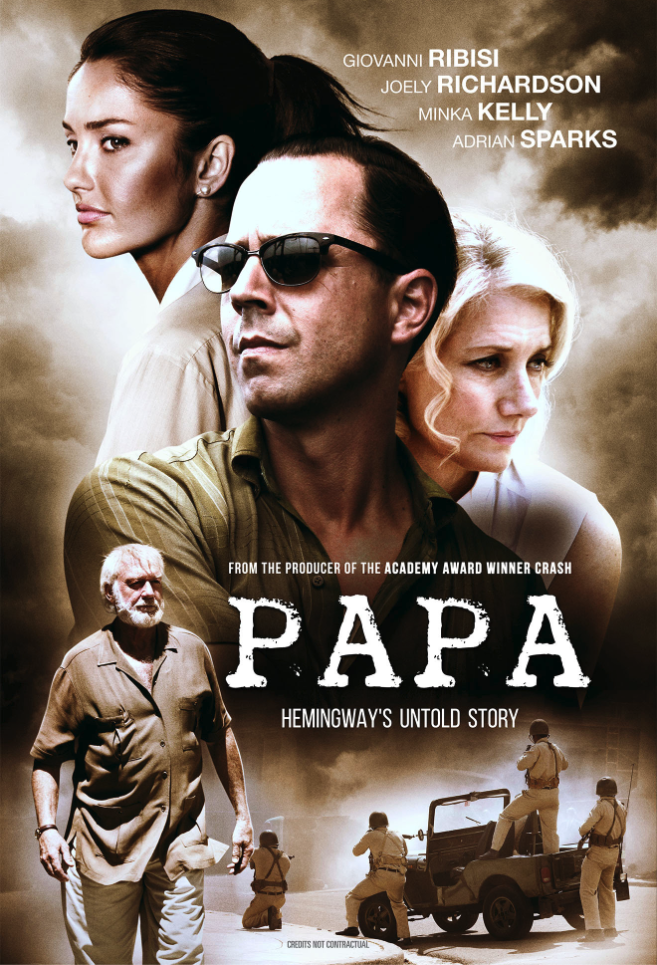
This is a biographical film released in 2015 written by Denne Bart Petitclerc and directed by Bob Yari. The story is based on events from Ernest Hemingway’s life in Cuba in the 1950s, and on a friendship that developed there between Hemingway and Petitclerc (Ed Myers in the film, played by Giovanni Ribisi), who was then a young journalist. Adrian Sparks plays a convincing Hemingway, and Joely Richardson plays Mary Welsh Hemingway, his fourth wife.
The story is set in 1959, when a young journalist is working for a Miami newspaper. He wants to be a writer and had long admired Hemingway, then living in Cuba. Myers writes to Hemingway and is surprised when he answers, inviting the journalist to Cuba to go fishing. While the Cuban Revolution comes to a boil around them, Hemingway advises Myers on his writing. Myers continues to write articles for his newspaper, reporting on the Cuban Revolution.
An early scene from the film depicts rebels allied with Fidel Castro bursting into a street near Havana’s Government Palace to confront soldiers loyal to the government of Fulgencio Batista. Hemingway and Myers take cover, with Hemingway guiding Myers through the war zone. They develop a friendship and Myers spends an increasing amount of time with the Hemingways, often witnessing chaotic scenes showing Hemingway’s violent temper and drunkenness, as well as attempts to kill himself, which he accomplishes two years later after fleeing Cuba for Idaho.
In a revealing scene at least partially based on a true story, the young journalist is invited to meet the head of the Florida and Cuban mafia in a bar, Santo Trafficante (played by James Remar), who proceeds to tell him that a high up official in the U.S. government is out to get Hemingway. It turns out to be J. Edgar Hoover, the powerful head of the F.B.I., who has the I.R.S. hit Hemingway with a bill for back taxes of $40,000.
Hemingway had told a story at a party about Hoover’s penchant for homosexuality and cross dressing in women’s clothes, based on a story he heard from an F.B.I. agent who had died. Apparently this story is true, and has marred Hoover’s reputation in history, along with his practice of building secret files on public officials to cement his power and blackmail rich and powerful people.
The film received generally unfavorable reviews, but in retrospect, it seems worth recommending for its part in depicting the famous writer’s controversial life.










Excellent and timely information. Is it not time to end the embargo on Cuba? Do you remember the time when many baseball teams played there, and Venezuela, during the winter. Does anyone remember Castro was a world class fast ball hurler scouted by the Yankees and Baltimore? What a different world it would have been had Castro remained in baseball.