




A view of the Golden Gate Bridge from the south: By Glynn Wilson
Tales From the MoJo Road –
By Glynn Wilson –
SAN FRANCISCO, Calif. – From the Golden Gate Bridge crossing San Francisco Bay to Apple’s iconic round “Spaceship” campus in Cupertino near San Jose, there lies an ideal place in the universe that embodies the American Dream in the 21st century.
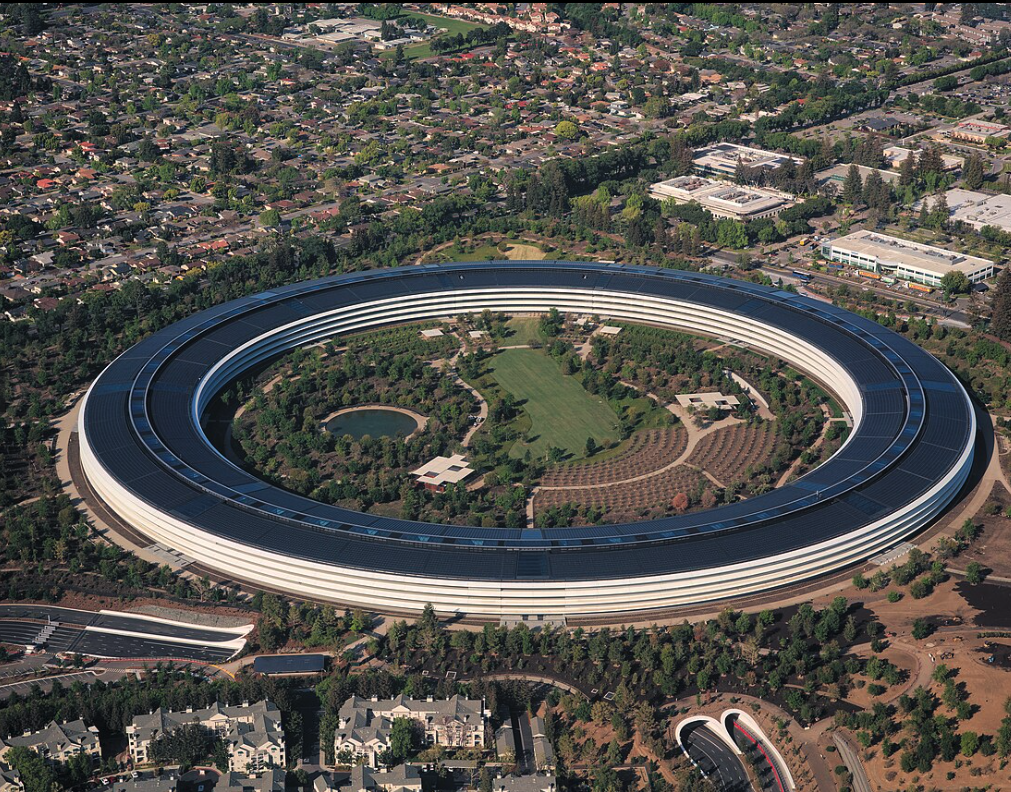
Apple’s “Spaceship” campus in Cupertino, California. NAJ screen shot
Driving north from San Jose on Interstate 101 on Wednesday, finally emerging from an unusual fog that has covered the area of late, the sun came out as I scanned the radio airwaves for rock stations.
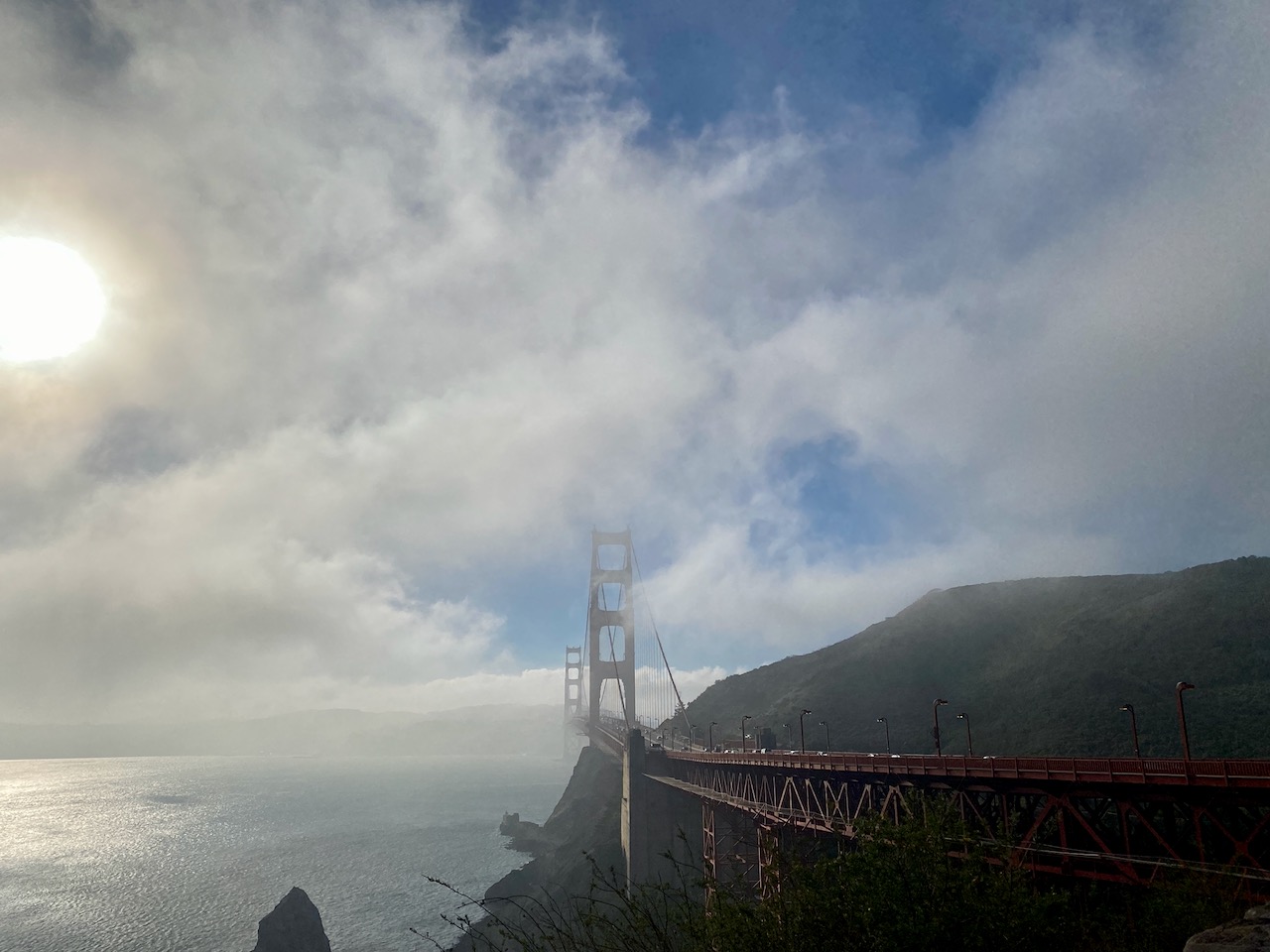
A view of the Golden Gate Bridge and San Francisco Bay from the north in the morning fog : By Glynn Wilson
Just as San Francisco Bay came into view, I heard a choir singing a Rolling Stones song, “You can’t always get what you want, but if you try sometimes, you just might get what you need.”
It was the perfect song to capture the moment for me and my life story, so I turned it up and drove into the city for the first time. This is a moment I will never forget, however much time I have left on this planet.
It was American journalist Donald C. Hoefler who first used the term “Silicon Valley” in a news story for the Electronic News on January 11, 1971. It was the idea of his friend and squire Ralph Vaerst who suggested the name for a series of articles under the headline “Silicon Valley, USA.” He does not get all the credit for coining the phrase. In May 1970 an advertisement ran in the Peninsula Times Tribune describing a Palo Alto company that “helps production people in Silicon Valley.”
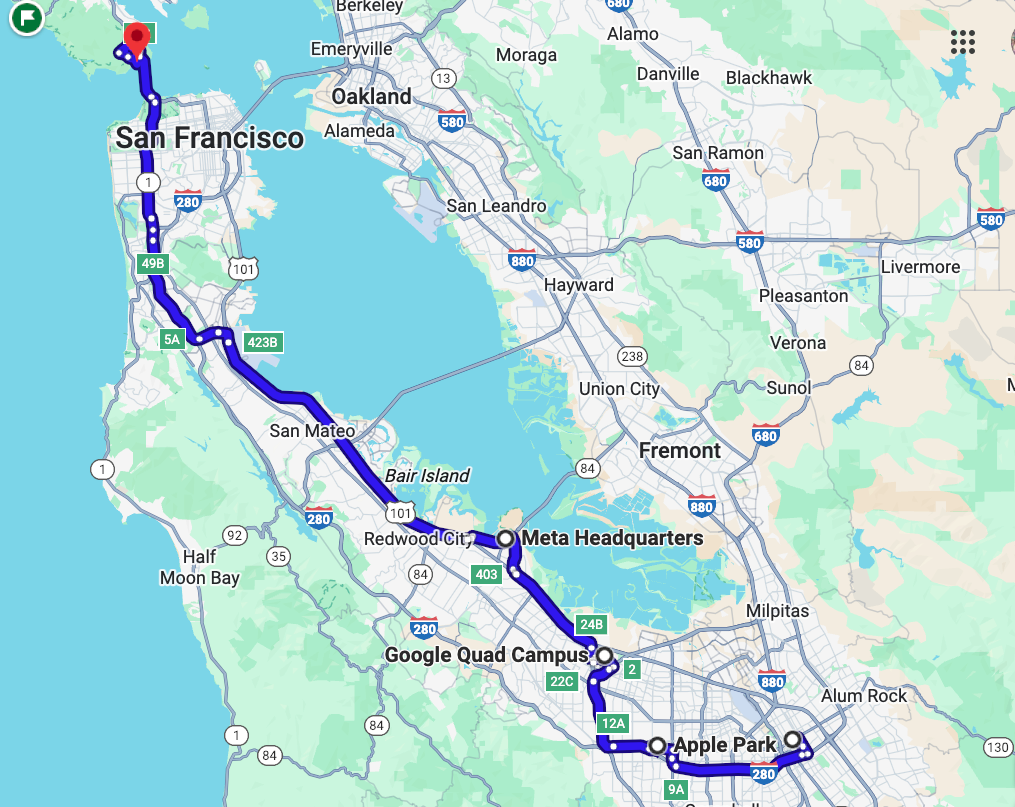
A Google map of Silicon Valley: NAJ screen shot
The region in Northern California became the global center for high technology and innovation in the last couple of decades of the 20th century and led the country and the world into the 21st century. It basically encompasses the area bordering San Francisco Bay on the west, corresponding roughly to the geographical area of the Santa Clara Valley.
It also serves as a general metonym for California’s high-tech business sector and includes the cities of Sunnyvale, Mountain View, Palo Alto, Menlo Park, Santa Clara, Redwood City and Cupertino all the way south of the bay to San Jose. The Metropolitan Statistical Area has the third-highest Gross Domestic Product per capita in the world next to Zurich, Switzerland and Oslo, Norway. It has the highest percentage of homes valued at $1 million or more in the U.S., according to Wikipedia and other sources.
Silicon Valley is home to many of the world’s largest high-tech corporations, including the headquarters of more than 30 businesses in the Fortune 1000, along with thousands of startup companies. It accounts for one-third of all of the venture capital investment in the country, which has helped it to become a leading hub and startup ecosystem for high-tech innovation. It was in Silicon Valley that the silicon-based integrated circuit, the microprocessor and the personal microcomputer were developed that led to the technological development in the 1990s, resulting in the Dot Com Boom and busted bubble at the turn of the century in the year 2000.
Without belaboring the entire history of all of that, let me just say that I was there for the dot com bubble and bust, starting one of the first online magazines on the web while teaching journalism at the University of Tennessee in Knoxville. It’s still online, and was picked up by the Web Internet Archive and Wayback Machine in San Francisco. It was to be a general interest regional magazine, the New Yorker of the South.
The Southerner at Southerner.Net
But as we were pitching it to venture capital firms, on the verge of getting some to write us checks so we could pay people to keep going, the news of the Dot Com Bubble bursting hit the airwaves. It was a stock market bubble that built up during the late 1990s and peaked on Friday, March 10, 2000. The period of rapid market growth was attributable to the personal computer revolution and widespread adoption of the Internet and World Wide Web, resulting in a dispensation of available venture capital and the rapid growth of valuations in new internet startups. Between 1995 and its peak in March 2000, investments in the Nasdaq Composite stock market index rose by 600 percent, only to fall 78 percent from its peak by October 2002, giving up all its gains during the bubble.
Seeing the writing on the wall I took a full time tenure track teaching job at a prestigious, private university, Loyola University in New Orleans, before going to work for The Dallas Morning News and the New York Times at the real end of the 20th century, and the end of the era of mass circulation daily newspapers.
During the boom and bust, many online shopping companies like Pets.com, Webvan, and Boo.com, as well as several communication companies, such as WorldCom, NorthPoint Communications, and Global Crossing, failed and shut down. Larger companies like Amazon and Cisco Systems lost large portions of their market capitalization. Cisco lost 80 percent of its stock value.
On January 10, 2000, America Online (AOL), led by Steve Case and Ted Leonsis, announced what would become a disastrous merger with Time Warner, led by Gerald M. Levin. The merger was the largest to date and was questioned by many analysts (including me, as one of my first lectures at Loyola University New Orleans – in the big lecture hall with the big screen that year – explained the implications of this story). By March the market collapsed, and those leading the legendary media company realized they had made a terrible mistake.
The A.I. Bubble Will Also Go Bust
While figures show that by 2021 the region of Silicon Valley employed about a half million information technology workers, and became a hotspot for tech tourism as well, things have taken a bit of a nose dive of late as the Artificial Intelligence boom (or bubble) has led to massive layoffs and a rethinking of the American Dream itself. Will A.I. bots end up running everything? How will people stay alive and make a living?
Many workers in the area have been affected by layoffs in the aftermath of what has been euphemistically called a period of “overhiring” during the Covid pandemic. U.S. tech companies have announced roughly 154,000 layoffs in the past couple of years. The big tech giants Microsoft, Amazon, Meta, Google and Tesla all announced cuts of up to 10,000 employees.
Even the Gen Z kids who went to college to learn to be hackers and code programmers are finding it hard to find and keep jobs already. The bots are on the verge of creating all the code themselves, and you don’t have to feed them, clothe them – or keep them high on speed. They just require ungodly amounts of electricity and massive amounts of water to keep them cool.

The Meta Campus in Palo Alto, California, home to Facebook and Instagram, is looking pretty empty these days. NAJ screen shot
While much of the broader labor market in the U.S. economy has been marked by slow hiring, it’s been cushioned by low levels of firing, according to Business Insider and other sources. But not so much in the tech sector. The job market has been particularly challenging for tech professionals, who are competing not only with a growing pool of laid-off workers but also with recent college graduates and employed tech professionals looking to switch roles.
At the same time, the rise of A.I. tools like ChatGPT and application bots has made it easier for candidates to submit hundreds of applications, overwhelming some employers and making it harder for top applicants to stand out from the crowd. This surge in demand for tech roles has coincided with a decline in the supply of available openings. After peaking in 2022 following a pandemic-era hiring spree, tech job postings on Indeed are down 33 percent from 2020 levels. The roles that remain are taking longer for companies to fill, and amid economic uncertainty and the early effects of A.I., U.S. businesses are now hiring at one of the slowest rates since 2013.
To succeed in the 2025 tech job market, some candidates believe they need to be close to the perfect candidate. As former Microsoft worker Mody Khan put it, “It feels like recruiters are looking for Superman.”
As the hiring slowdown drags on, some tech professionals are bracing for what might come.
The year the Big Tech job market cracked
In October, Amazon announced plans to cut 14,000 corporate jobs, a move CEO Andy Jassy said was intended to reshape the company’s culture. Many began searching for new roles soon after they learned they’d been laid off, in part because they felt the tech job market could be challenging.
Since 2022, Big Tech giants like Bill Gates’ Microsoft, Apple (run by Alabama’s Tim Cook), Amazon (started by Jeff Bezos), Alphabet (Google), Mark Zuckerberg’s Meta (Facebook and Instagram) and Tesla (Elon Musk) have collectively announced layoffs of more than 125,000 workers, according to data from the online tracker Layoffs.fyi. About 34,000 of those came at Amazon and Microsoft.
James Hwang, a former Amazon IT support engineer, said the hiring landscape has been just as tough as advertised.
“The current job market has been crazy hard,” said the 27-year-old, who lives in Michigan. “I’ve already applied to 100 jobs and haven’t gotten any interviews yet.”
And that’s just a few examples. There is no doubt the A.I. market is creating a massive bubble of its own, and it’s just a matter of time before it bursts, even according to the head of biggest evil empire of them all, Google.
Google Empire Will Be Tested
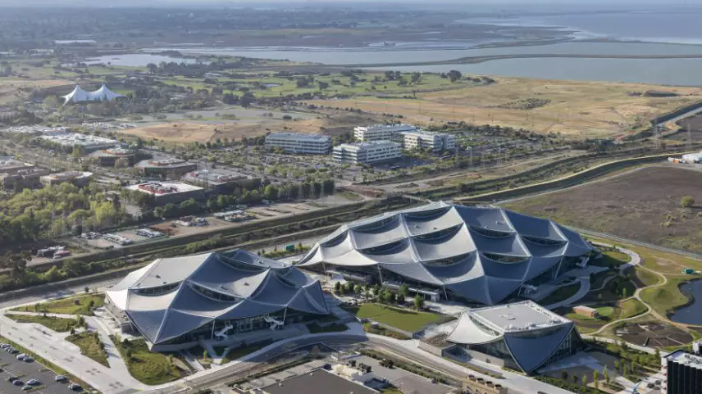
The Google campus in Mountain View, California: NAJ screen shot
Google boss says trillion-dollar AI investment boom has ‘elements of irrationality’
Every company would be affected if the A.I. bubble were to burst, Sundar Pichai, the head of Google’s parent company Alphabet, admitted in a recent interview with the BBC.
Pichai said while the growth of Artificial Intelligence (A.I.) investment had been an “extraordinary moment,” there was some “irrationality” in the A.I. boom. It comes amid fears in Silicon Valley and beyond of a bubble as the value of A.I. tech companies has soared in recent months and companies spend big on the burgeoning industry.
Asked whether Google would be immune to the impact of the A.I. bubble bursting, Pichai said the tech giant could weather that potential storm, he thinks, but he also issued a warning.
“I think no company is going to be immune, including us,” he said.
He’s also worried about the energy and water needs for A.I. data centers, throwing the fight against climate change into chaos, as well as the accuracy of his A.I. models and the effect of the A.I. revolution on jobs.
Alphabet shares have doubled in value in seven months as markets have grown more confident in the search giant’s ability to fend off the threat from ChatGPT owner OpenAI. The development of specialized super chips for A.I. to compete with Nvidia is also on the table.
As valuations rise, some analysts have expressed skepticism about a complicated web of trillion dollar deals being done around OpenAI, which is expected to have revenues this year of less than one thousandth of the planned investment. There is no way that is sustainable.
“It has raised fears stock markets are heading for a repeat of the dotcom boom and bust of the late 1990s,” says the BBC. “This saw the values of early internet companies surge amid a wave of optimism for what was then a new technology, before the bubble burst in early 2000 and many share prices collapsed.”
This led to some companies going bust, resulting in massive job losses. A drop in share prices can also hit the value of people’s savings, including their pension funds.
In comments echoing those made by U.S. Federal Reserve chairman Alan Greenspan in 1996, warning of “irrational exuberance” in the market well ahead of the Dot Com crash, Pichai said the industry can “overshoot” in investment cycles like this.
“We can look back at the internet right now,” he said. “There was clearly a lot of excess investment, but none of us would question whether the internet was profound. I expect A.I. to be the same. So I think it’s both rational and there are elements of irrationality through a moment like this.”
His comments follow a warning from Jamie Dimon, the boss of U.S. bank JP Morgan, who told the BBC that investment in A.I. should pay off eventually, but some of the money poured into the industry would “probably be lost.”
Pichai said Google’s unique model of owning its own “full stack” of technologies – from chips to YouTube data, to models and frontier science – meant it was in a better position to ride out any AI market turbulence, in part because of its business practices that led to the death of print and online newspapers as the first web advertising platform.
Business Practices
Even before the social media companies captured a large share of the online advertising market, Google convinced many advertisers to switch from print and direct advertising to Google’s over complicated, tech nerd system. They promised to pay news outlets for running Google ads, tossing a few grants around for bait. But the hackers designed a system where they keep most of the money, paying online news publishers the equivalent of about a penny a click, not enough to pay for news gathering and writing, copy editing, photography, videography or anything else. If they had simply been willing to pay two pennies a page view instead, many news outlets now gone could have made it.
It was a Ponzi scheme that leaves them with $180 billion in cash in the bank doing nothing. Yet you can’t even find a law firm in the U.S. that will challenge them in court. That would be like David taking on Goliath with a slingshot. But in other countries, including Europe, the company has paid out billions for its monopolistic practices.
Google is still trying to expand its footprint in the UK in spite of the regulatory treatment it has received in that country, and in part due to politics in the U.S. today.
In September, Alphabet announced it was investing in A.I. in the UK, committing $50 billion to infrastructure and research over the next two years.
Pichai said Alphabet will develop “state of the art” research work at its key A.I. unit DeepMind, based in London.
For the first time, he revealed that Google would “over time” take a step that is being pushed for in government to “train our models” in the UK – a move that cabinet ministers believe would cement the UK as the number three A.I. “superpower” after the U.S. and China.
“We are committed to investing in the UK in a pretty significant way,” Pichai said.
However, he also warned about the “immense” energy needs of A.I., which made up 1.5 percent of the world’s electricity consumption last year, according to the International Energy Agency.
Pichai admits action is needed, including in the UK, to develop new sources of energy and scale up energy infrastructure.
“You don’t want to constrain an economy based on energy, and I think that will have consequences,” he said.
This is already happening in the U.S. because of Trump’s insistence on canceling alternative energy programs in solar, wind and battery development to prop up the oil and gas companies and extend the life of fossil fuels, along with their harmful emissions.
Pichai also acknowledged that the intensive energy needs of its expanding A.I. venture meant there was “slippage” on the company’s climate targets, a nice euphemism, yet he is still claiming the target is to achieve net zero by 2030 by investing in new energy technologies.
“The rate at which we were hoping to make progress will be impacted,” he said.
Critics say there is no way they will achieve that goal, as most international goals for reducing carbon being pumped into the atmosphere causing global warming and climate change are also going by the wayside, mainly due to the A.I. problem and the political climate in the U.S.
A.I. will also affect work as we know it, Pichai admitted, calling it “the most profound technology” developed by humankind.
“We will have to work through societal disruptions,” he admitted.
Do You Know the Way to San Jose?
We will be spending more time in San Francisco looking into this story in the weeks ahead.
But as I was heading back south toward San Jose, another song caught my attention on the radio dial.
“Do You Know the Way to San Jose” is a 1968 popular song written and composed for singer Dionne Warwick by Burt Bacharach.
Meanwhile, we would like to dispel a myth perpetrated on the people of California by right-wing Republicans and other moronic rednecks.
“Why would you want to go to California,” a friend recently wrote to me in the comments on Facebook. “It’s the land of fruits and nuts.”
This from a Democrat who should know better than to adopt a Republican cliche and stereotype about liberal hippies and gay activists in San Francisco.
On the way back through Modesto toward Coulterville and Yosemite National Park, it became apparent where this saying first came into being. It is a land of fruits and nuts, orchards of fruit trees and nut trees as the far as the eye can see.
Here’s another iconic song about San Francisco.
There is more to come in this series investigating what’s happening in the economy of the U.S. and California, so check back soon for more.
And for my friends in Alabama who are Roll Tide Alabama fans, sponsored by Lays Potato Chips, you may be interested to know that the potato chip is manufactured in Modesto, California. Sorry to burst your bubble.
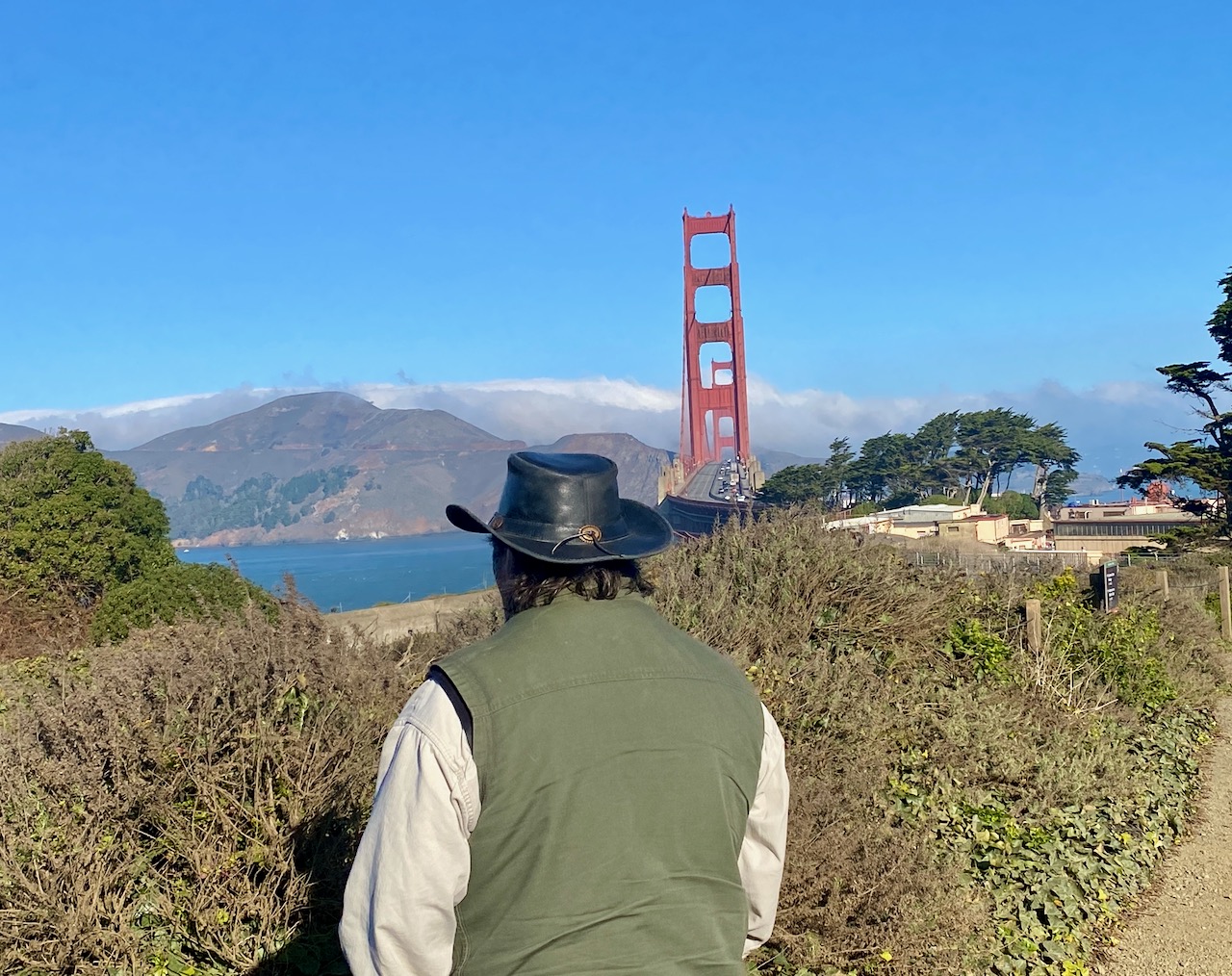
That’s me looking at the Golden Gate Bridge and San Francisco Bay from the south: By Tab Gilbert
___
If you support truth in reporting with no paywall, and fearless writing with no popup ads or sponsored content, consider making a contribution today with GoFundMe or Patreon or PayPal.










Very informative AND I do remember Bear Bryant promoting Lays potato chips & Coke along with his rival Auburn counterparts….before healthy living became a “thing”…