



Multiple Intersections Blocked for Hours – Another Black Eye for Google –
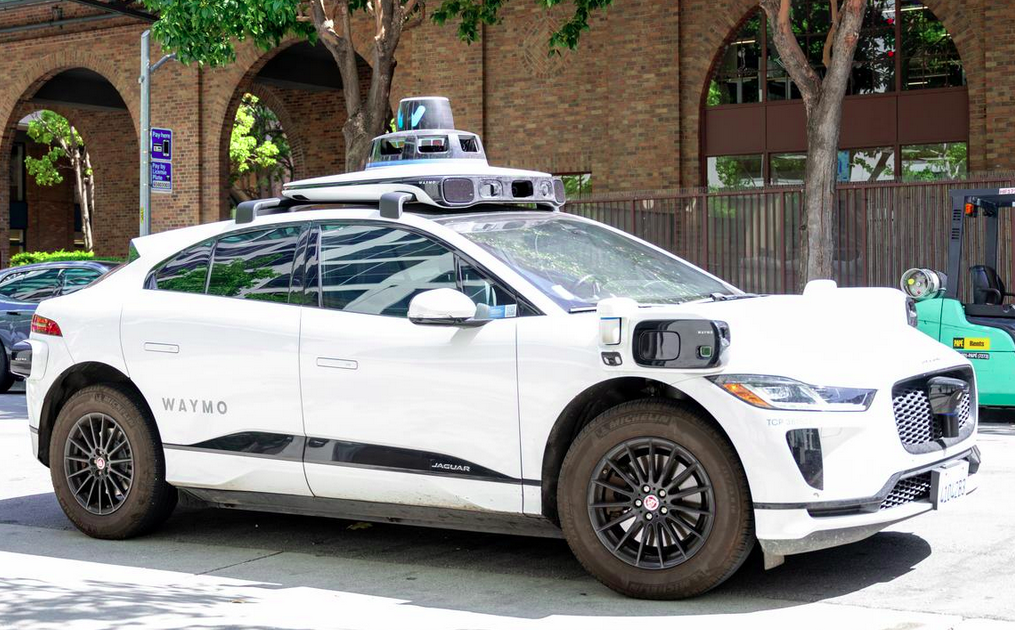
Google’s Waymo Taxi stalled in the streets of San Francisco in a power blackout: NAJ screen shot
Tales From the MoJo Road –
By Glynn Wilson –
SAN FRANCISCO, Calif. – Nothing says Silicon Valley like Google’s Waymo robotaxis, the newest, greatest form of transportation invented since the electric streetcar in 1892, the year my grandmother was born. It served as a more traditional icon of the great city on the West Coast featured in stories since the days of Mark Twain and movies and television since.
It’s still not clear to me why anyone would even bother to dream up a driverless car. Driving is all the fun. Not riding. It’s not a boat. Only a college dropout tech nerd could come up with such a hairbrained idea in the first place, then get a bunch of Wall Street suits to fund it. What a world.
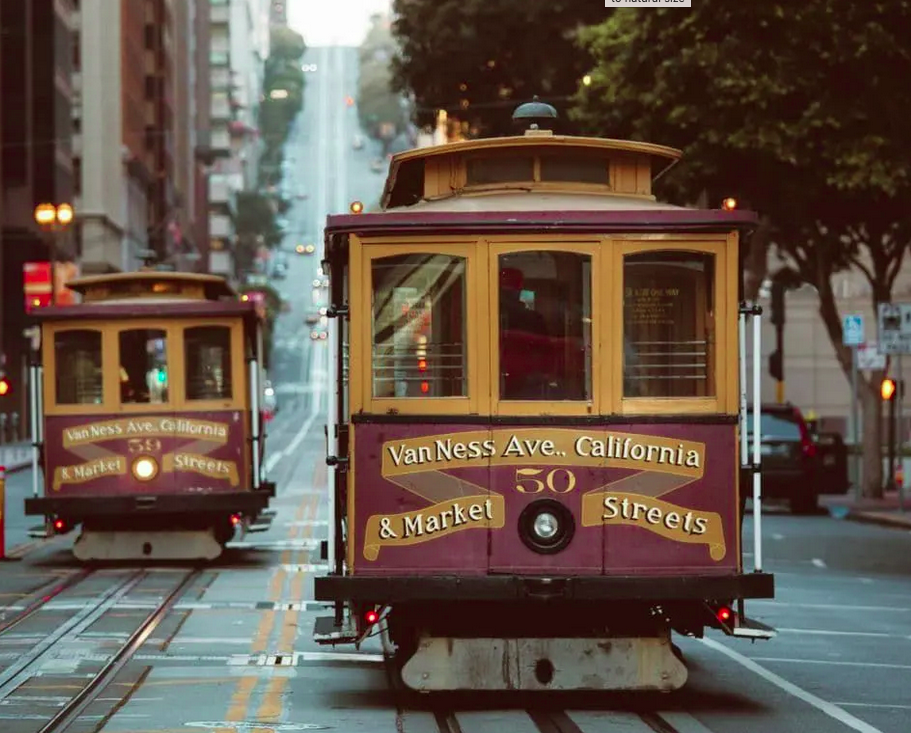
The famous San Francisco Street Car: NAJ screen shot
I suspect Twain would have shared my giggle at Google the other day when Waymo taxis stalled and died in the streets during a power blackout coming up on the Christmas holiday, blocking multiple intersections for hours. The unprepared company’s ad hoc response to the disaster was to quickly hire people for $22 to find the little white cars all over the city and manually open the doors, to finally let the people trapped inside for hours out.
What happened to the battery-powered GPS satellite signal? The cellphone tower WiFi?
No one’s asking or answering, according to what I’ve seen, not even the A.I. bots now training to take over the city, county, state and country.
It’s like a line uttered by a Hollywood agent in Bill Murray’s “A Very Murray Christmas.”
“Total disaster. A total disaster Bill. This is a Murraycane.”
No one was hurt. So it’s funny. Especially if you already suspect and don’t like Google.
Botega Kat Killed by Google Waymo Taxi

KitKat, a beloved bodega cat who greeted visitors to Randa’s Market and regularly visited neighboring businesses, was killed Tuesday: Courtesy Mike Zeidan
But not so much the last black eye story for Google about Waymo taxis, when one ran over a popular neighborhood botega cat named KitKat. It was a sensation on Facebook, and there’s even a TikTok video showing the cat getting run over.
A PR disaster if there ever was one. Not that these things have the social and political power they once had, before the bot algorithms first started taking over.
According to the San Francisco Standard, a cat known as the “mayor of 16th Street” was … run over by a Waymo autonomous vehicle, “according to the cat’s owner, sparking grief around the Mission Dolores bodega where he roamed.”
KitKat, a feline fixture at Randa’s Market, was struck by the robotaxi around 11:30 p.m. Monday, said the shop’s owner, Mike Zeidan. The cat was last seen on the sidewalk next to a transit lane, according to an anonymous complaint filed with the city’s 311 system.
The complaint alleged that the driverless car had made a stop near the market. The free-range KitKat was found underneath the vehicle, according to Zeidan. The cat was pronounced dead after being taken to an animal hospital by a store employee.
“Honestly, man, it’s difficult. He was a one-of-a-kind cat. He brought joy to so many people,” Zeidan said of the 9-year-old cat. “People loved him.”
The 311 complaint filed early Tuesday claimed that the Waymo did not slow down, swerve, or attempt to avoid the cat. Waymos “should not be on the street if they can’t spot small animals in the dark,” the complaint stated.
Google and Waymo said they would make a donation to an unspecified animal rights organization in KitKat’s honor.
“We reviewed this, and while our vehicle was stopped to pick up passengers, a nearby cat darted under our vehicle as it was pulling away,” a company spokesperson said by email. “We send our deepest sympathies to the cat’s owner and the community who knew and loved him.”
Waymo robotaxi kills ‘one-of-a-kind’ bodega cat…”
The state had logged 884 autonomous vehicle collision reports as of Friday, according to the Department of Motor Vehicles.
A dog was struck and killed by a Waymo in Bernal Heights in 2023. A week later, a Labrador survived getting hit by a Cruise self-driving car. Tests were suspended in San Francisco for awhile. Now they’re back.
The incident inspired the New York Times to wonder how they would handle other disasters, natural or man made.
After Power Outage, San Francisco Wonders: Can Robot Taxis Handle a Big Earthquake?
City officials have called for a hearing investigating Waymo after the company’s self-driving taxis suffered widespread problems during a power outage. San Francisco officials on Monday called for an investigation into Waymo after its autonomous taxis blocked intersections and snarled traffic during an hourslong power outage over the weekend.
The meltdown, which led Waymo to temporarily shut down its entire fleet in San Francisco, raised alarms about whether the vehicles might impede evacuations or emergency services during a bigger disaster, such as a major earthquake.
“We haven’t seen a situation before where these Waymos have stalled en masse across the city,” said Bilal Mahmood, a San Francisco supervisor who announced he would hold a hearing examining Waymo’s operations during emergencies. “We want to make sure what we saw this weekend doesn’t happen again.”
San Francisco is the nation’s epicenter of driverless cars, and Waymos in particular have become ubiquitous in the past year, with the camera-laden white Jaguars seemingly on every block.
Waymo — which is owned by Alphabet, the parent company of Google — arrived in the tech capital in 2023 and now has around 1,000 vehicles roaming its hills and avenues.
After initial hesitation, San Franciscans have increasingly grown to rely on the cars, which are no longer just a novelty. Some women feel safer in a driverless car than in one driven by a man, and parents have been known to use them for school pickups.
Breaking Traffic Laws
Considering the known fact that these new Artificially Intelligent tech toys all have major flaws in their “intelligence,” people are also beginning to wonder things like: What happens when a driverless car makes an illegal U-Turn? I mean, who gets the ticket?
California approved a law last year allowing the police to cite autonomous vehicles, but it did not specify any penalties, and the law doesn’t take effect until 2026, according to the New York Times.
Two officers in San Bruno, Calif., a suburb of San Francisco, were checking for drunken drivers over the weekend when they saw a car make an illegal U-turn right in front of them. But it wasn’t a drunken driver. It was a driverless Waymo taxi.
The officers turned on the flashing lights on their police car and pulled behind the Waymo, which automatically came to a stop. But the officers could do little else other than tell a Waymo representative what had happened.
“Since there was no human driver, a ticket couldn’t be issued,” the San Bruno Police said in a statement on Facebook that included a photo of an officer peering into the empty driver’s seat of the taxi. “(Our citation books don’t have a box for ‘robot’).”
The bizarre traffic stop pointed to the challenge law enforcement officials face in trying to ticket autonomous vehicles for moving violations that would be routine if a human driver were behind the wheel.
Last year, Gov. Gavin Newsom of California signed a law authorizing the police to issue “notices of autonomous vehicle noncompliance” when they see driverless cars breaking local traffic laws. But the law did not specify any penalties associated with those notices and it does not take effect until July 1, 2026.
Until then, there are no clear rules in California governing how to enforce local traffic laws for autonomous vehicles, said Sgt. Scott Smithmatungol of the San Bruno Police Department’s Traffic Division. Enforcement “feels like it’s still in the beta-testing stage,” he said.
There are also questions now about how much electric car taxis will actually lower pollution emissions and save energy?
While Waymo is rapidly expanding in the U.S., experts say there are big questions about how self-driving cars could affect traffic and greenhouse gas emissions.
All these autonomous E.V. rides have the potential to replace trips in gas-powered vehicles, according to the New York Times, and transportation is the biggest source of greenhouse gas emissions in the U.S.
Yet there are big questions about the long-term environmental implications of autonomous vehicles. Increased traffic and the industry’s demand for electricity could complicate things. In the long term, experts say, driverless vehicles could also cause a surge in overall demand for car transportation as opposed to mass transit.
And what about the impact on jobs and the economy?
They won’t make a real dent until the industry grows significantly in market share. Waymo operates 1,000 vehicles in San Francisco, its largest market. But as they grab a higher market share, it’s just another way to throw real people out of jobs, not only putting more cab driver’s out of work, but also Uber and Lyft drivers, perhaps bus drivers and train conductors.
Research has shown that replacing tailpipes with batteries can have a positive effect on air quality. A study from the University of Southern California’s medical school found that emergency room visits for asthma declined modestly when as few as 20 zero-emissions vehicles per 1,000 residents were added to the roads. Other research has found that electrifying 17 percent of cars could lead to “modest but widespread” reductions in ozone and particulate matter.
So better for the environment, maybe. Not so good for the human work force.
Google Faces Threats to its Empire
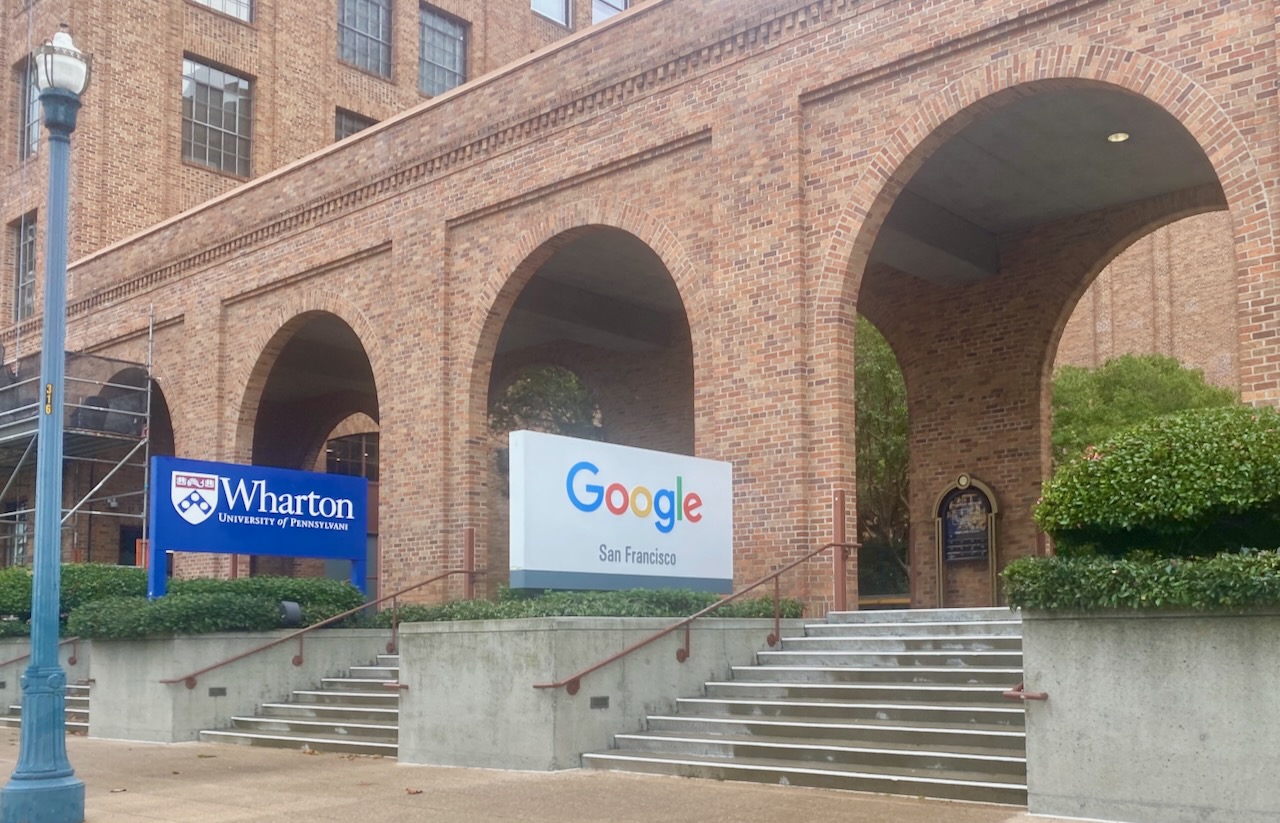
Google’s headquarters in San Francisco: By Glynn Wilson
Along with all the other Big Tech companies borrowing and gambling billions and billions of dollars in the battle on who can build the best Artificial Intelligent Bot Machine, Google will face the same drop in value as them all on the day the A.I. Bubble bursts.
NAJ: You Can’t Always Get What You Want: The A.I. Bubble Will Burst
The company’s problems could get even worse.
Google faces threat that could destroy its business
In the early 2000s, Google (GOOGL) was just finding its footing among internet users who enjoyed it for its ease of use and massive content, scrapped off the web with bots. It quickly outgrew its competitors, and by the mid-2000s, the verb “Google” was born, acting as an predictor of the search engine’s future dominance.
What started as just a search engine became much, much more as Google continued to develop. In 2006, it launched the suite that would eventually become Workplace, which eventually drew millions of businesses to use it. That same year, it also devoured YouTube, adding the video sharing platform in its capitalist appetite to dominate the world.
Billions of people across the globe use Google’s products every day. Alphabet (GOOGL), Google’s parent company, holds a rare spot as one of the magnificent seven stocks known for its high level of influence.
“Simply put, it’s hard to imagine a world where Google doesn’t have enormous sway,” according to The Street. While the company may not be going anywhere, they say, “it’s now facing the biggest threat to its business model that it’s had to contend with in a very long time.”
Zero-Click Search
As the A.I. boom continues to transform the landscape of the tech world, a new type of user behavior has begun to gain popularity on the web. It’s called zero-click search, and it means a person searches for something and gets the answer they want without clicking a single link. There are several reasons for this, including the A.I. Overview section that Google has added to the top of many search result pages.
The contradictory question is: Why is Google willing to jeopardize the basis of its fortune in a casino bet that somehow A.I. will pay for itself and make even more money in the long run? What do they know that nobody else does?
Forbes magazine declares that Big Tech is facing a near perfect storm.
Big Tech In Turmoil, The Challenges Confronting Meta And Google
Meta Platforms (META) and Alphabet (GOOGL), the parent company of Google, face mounting challenges, according to Forbes, shaking investor confidence. Their stock prices are down 32.3% for Meta and 27.0% for Google from all-time highs. Once unshakable pillars of the tech industry, these giants are contending with regulatory scrutiny, economic headwinds from tariffs, intense competition in A.I., and internal restructuring efforts, including mass layoffs.
Both Meta and Google are under intense regulatory pressure as well. The tech giants are facing antitrust lawsuits that threaten their core business models. Meta is embroiled in a high-stakes trial with the U.S. Federal Trade Commission (FTC), which alleges the company maintains an illegal monopoly through its acquisitions of Instagram and WhatsApp.
The FTC seeks to force Meta to divest these platforms, a move that could dismantle its social media empire. Meta also faces scrutiny in the European Union under the Digital Services Act and Digital Markets Act, which impose strict data handling and competitive practice regulations.
Google’s core search business faces existential threats from A.I.-driven alternatives, and its cloud division has underperformed expectations. The antitrust ruling and potential Chrome divestiture add uncertainty. Despite its $75 billion A.I. investment, Google’s stock has lagged, with analysts questioning its ability to adapt without disrupting its search monopoly.
Google is reeling from a federal judge’s ruling that it illegally maintained a monopoly in online search. The U.S. Department of Justice has proposed forcing Google to sell its Chrome browser to restore competition. Google will appeal. These legal battles create uncertainty, as potential breakups or fines could erode market dominance and profitability.
“The tech sector is navigating a perfect storm,” according to Forbes.
Trump’s tariffs and recession fears have triggered a $750 billion market cap loss for the seven largest tech firms on March 10, 2025. A.I. spending, while transformative, raises concerns about the return of investments, especially with competitors like China’s DeepSeek challenging U.S. dominance.
Layoffs may be a shift toward efficiency, but they risk stifling innovation, according to the Times of India.
Both companies are pouring billions into A.I., but investor concerns are growing. Meta plans to spend over $60 billion in 2025, focusing on A.I. to enhance ad targeting and develop tools like personalized assistants.
Google is investing $75 billion, aiming to bolster its cloud and A.I. capabilities.
The emergence of China’s DeepSeek, an open-source A.I. model built at a fraction of U.S. costs, has rattled investors, raising fears that cheaper competitors could undercut investments.
Business Insider reported Meta’s CTO, Andrew Bosworth suggested that Google faces a “business model challenge” in A.I., as it may need to cannibalize its search dominance to innovate.
Both companies are cutting jobs to streamline operations and prioritize A.I. Meta eliminated 3,600+ positions in 2025, part of a strategy to recruit A.I. talent. Google is on its third round of layoffs, targeting its Platforms & Devices unit, including Android and Pixel teams, with the potential of hundreds affected. These cuts signal instability, eroding employee morale and investor confidence.
Meta faces fierce competition from TikTok, projected to surpass 1.8 billion users, challenging its social media dominance. Also, Meta is experiencing a decrease in advertising revenue due to the significant reduction in ad spending by major advertisers like Temu and Shein, according to Investor’s Business Daily.
Google’s core search business is threatened by A.I.-driven tools that generate quick summaries, potentially reducing reliance on traditional search. Both companies are also navigating a broader tech selloff, with the Nasdaq dropping to a six-month low in March 2025 amid recession fears and tariff concerns.
Yet the company is leaning into A.I., while millions of people are opening OpenAI’s ChatGPT instead of Google to search for the information they need and want. Large language models deliver answers based on a tremendous amount of information scraped from the web, so asking it versus Googling saves you a lot of time and the results are often better than many of the over commercialized and even fake links.
Rather than click through web results looking for the answer to your query, an LLM can do that across a massive amount of information, condense and highlight the best of it, and reply within a few seconds.
This is why billions of people are already flocking to ChatGPT every month, a big problem for Google and Elon Musk’s Grok and others, all rolling the dice on the bots – over the people.
They are building a bot army right under our noses, and make no mistake. It is coming for us.
My question: Is there any force in the universe with the power to slow or stop this before it’s too late?
If you support truth in reporting with no paywall, and fearless writing with no popup ads or sponsored content, consider making a contribution today with GoFundMe or Patreon or PayPal.












GW, we are between funerals in Arizona and I must tell you that at (throwback to “Beatnik” coffee shops) I was engaged in several conversations, by a diversity of ages, by folks concerned about the “impending” A.I. bubble bursting. These are people with a diversity of mindsets but came to the same conclusion by different routes. Thought you would be interested!