



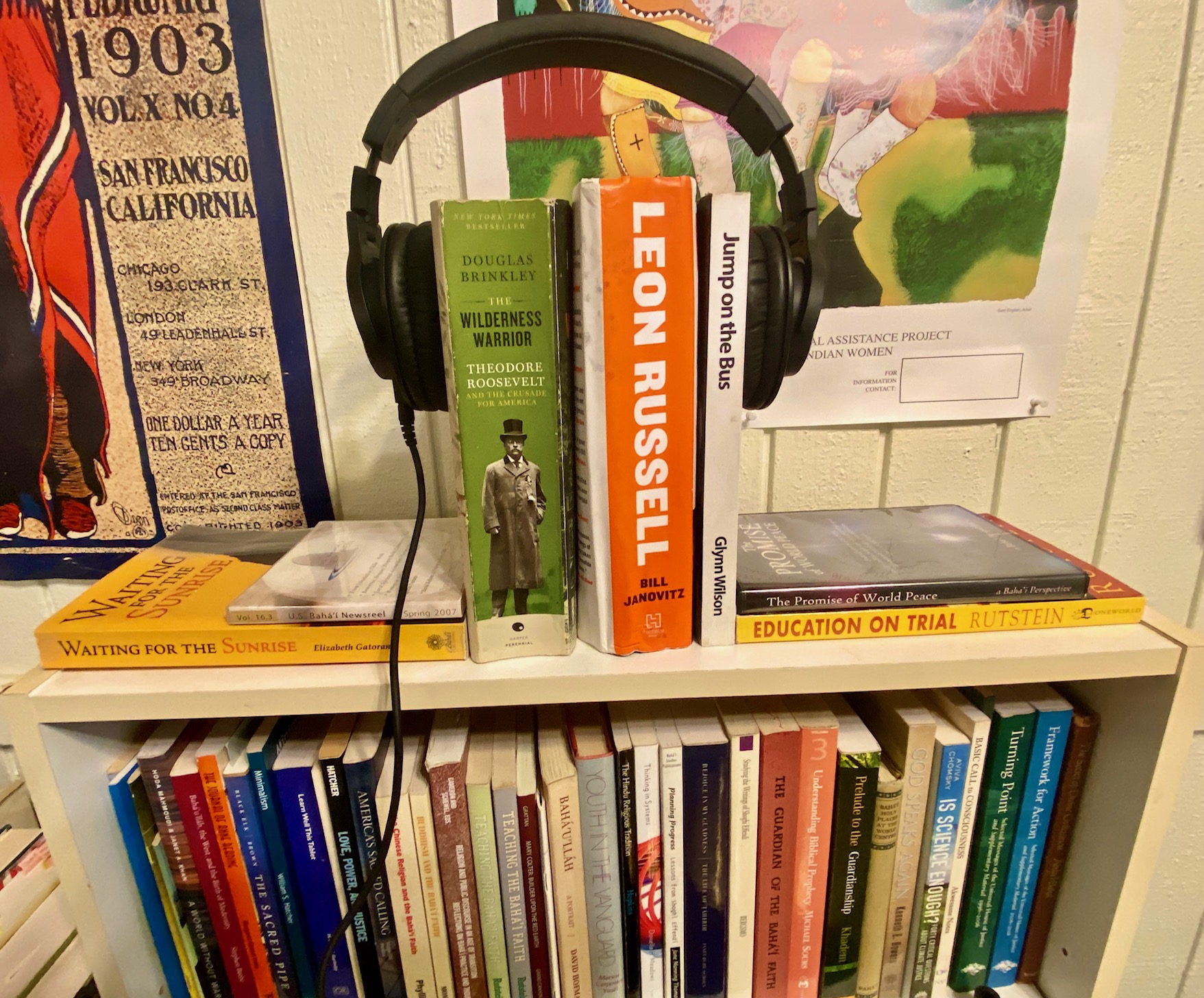
Illustration by Glynn Wilson
By Glynn Wilson –
These in many ways are dark days that try people’s very souls, when celebrating traditional holidays seems almost pointless and quaint.
Many Americans will go through the motions this week of traveling to visit relatives and consuming traditional meals of turkey and dressing with cranberry sauce and all that. Some will say prayers of thanks and try to pretend that all is right with the world, when most educated people, at least, now know that all is not fine, or right.
But we must soldier on, as summer soldiers and sunshine patriots if we must, because: What other choice do we have?
When the future looks bleak and not bright, perhaps it is darkest before the dawn, we tell ourselves.
You don’t need me to remind you, over and over again, what the problem is, or even to outline the steps we must take to get ourselves out of this current crisis of democracy and confidence. Besides, I’ve already done that ad nauseam.
What To Do About Trump? Democrats Hope to Retake the House and Senate in 2026 and Impeach Him Again
As for me, I’m just eternally grateful and thankful to my friends, fans, followers and family who have kept me alive over the past few years to document this crazy, mixed up time in our history. And to finally realize a long-held dream to make it all the way to the West Coast, 3,000 miles from “the troubles” in Washington, D.C.
Make no mistake in thinking about it. There is nothing perfect about California. Far from it.
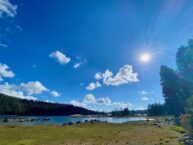
But at least the sun shines here more days of the year than it does in Alabama, Georgia, Tennessee, Louisiana, Virginia or Maryland, other places I’ve lived. Yes, I’ve already experienced a few days when the West Coast atmospheric rivers coming in off the Pacific dump inches of rain across the landscape, causing mudslides where the land is charred by wildfires. We are sure to experience some snowfall here this winter just down the mountain from Yosemite. Although they tell me at 1700 feet above sea level, we are just below the snow line.
While it may pile up and be measured in feet up Greely Hill and into the high passes of the national park, we are more likely to get a few dry dustings in town, not like the storms of heavy, wet snow you get in the East. And for all the warm weather you get on the Gulf Coast, I will never forget the bleakness of the last two winters I spent in Mobile, Alabama, where it rained every day for months.
Yes, some things are more expensive and bureaucratic in California, like my experience the other day dealing with the Department of Motor Vehicles to get Gwyneth Ford registered with the state. People here are leaving in droves. One interesting local couple I met over drinks in a local saloon are in the process of moving to Panama not far from the border with Costa Rica.
But for me, since I’m not trying to invest in the expensive property and along with it to pay the high taxes, this is a refuge where I can still engage in creative pursuits and try to help people in some humble way.
While thinking through the transition from covering daily news and politics as a reporter and writer to developing informative and even educational content for the radio and the web, I’m trying to address one of the biggest problems we face in this country: An attack on the very idea that education is a good thing of value. Perhaps one of the reasons this so-called “anti-woke” movement has gained steam and is being exploited by politicians is because 21 percent of Americans are nearly completely illiterate. When an official in the White House tells them on TV that’s OK, just vote for me, of course they will follow.
While 20 percent read below a fifth-grade level and 54 percent are below the sixth-grade level, according to the National Literacy Institute, they estimate that this costs the United States up to $2.2 trillion a year in economic productivity.
Compared to other countries, we rank 36th in the world on this measure. Literacy rates are defined as the percentage of people over the age of 15 who can read and write. Nine countries in the world have a 100 percent literacy rate: Andorra, Finland, Greenland, Liechtenstein, Luxembourg, Norway, Ukraine, Uzbekistan and North Korea. Imagine that. Thirty-seven countries have literacy rates higher than 99 percent, including Japan, Sweden, Australia, Germany, the United Kingdom, Ireland and France. Even China boasts a literacy rate of 97 percent.
How are we to compete in this world and in the future if our people can’t even read and write?
So as I was contemplating this problem recently, an idea occurred to me. What if we make American literature that is in the public domain readily available, and not only the free text, but the audio book as well? Would it not make it easier to learn to read if you could have the text in front of you without having to raise the money to buy books, and then have someone read the stories and books and make the audio version of the book available too? Listen while you read. Hit the pause button to look up the words you don’t have in your vocabulary.
So I begun to experiment with this on our new Yosemite Radio station website.
Yosemite Radio News and Events.
Then on Sunday, the New York Times ran a guest column from a librarian, who asked the question:
Do Audiobooks Count as Reading?
“Many people don’t think so,” he started out. “There is a pride — even a snobbishness — to being well read. Telling someone that you have only listened to a certain book usually comes out sounding like an apology. A recent NPR-Ipsos poll found that 41 percent of adults don’t believe audiobooks qualify as reading….
“I used to feel the same way myself,” he said. “A few years ago, sitting in an airport bar, I noticed a man next to me scrolling through his phone as a robotic voice read every word aloud at high speed. At first, I thought it was gibberish. Then I realized he was blind, using a feature on his iPhone that read aloud the text on his screen. Watching him — absorbed in the words, taking in their meaning — it struck me that he was reading the same way I did with my eyes.
“Because I have dyslexia,” he continued, “reading has never come easy. After that chance encounter, I tried a similar accessibility feature on my own iPhone. It was a revelation. For the first time, I could keep up, effortlessly absorb ideas and focus in a way I hadn’t before. My experience isn’t unusual; our definitions of reading haven’t kept up with how people actually read today.
“Reading builds empathy, focus and critical thinking,” he said. “But we seem to enjoy reading less and less. A recent study by researchers at University College London and the University of Florida published in iScience found a drop of more than 40 percent in daily reading for pleasure in the United States over the past two decades.
“At the same time, listening to books is on the rise — a trend libraries and publishers are seeing firsthand. Audiobook sales reached about $2.2 billion in the United States last year. At the New York Public Library, audio circulation rose 65 percent in the past five years while circulation for print and e-books stayed flat — a pattern mirrored nationwide. Audio has overtaken e-books in driving growth.
“So maybe,” he concluded, “even as the traditional way of reading books is in decline, the destigmatizing of audiobooks offers a path toward a more nuanced way of thinking about literacy…”
I think he may be right. And that realization is something to be thankful for.
Related Content
John Muir E-Books and Audio Books in the Public Domain
The American Crisis: By Thomas Paine – 1776
What to Make of ‘The American Revolution’ by Ken Burns and Company







Excellent insight!