



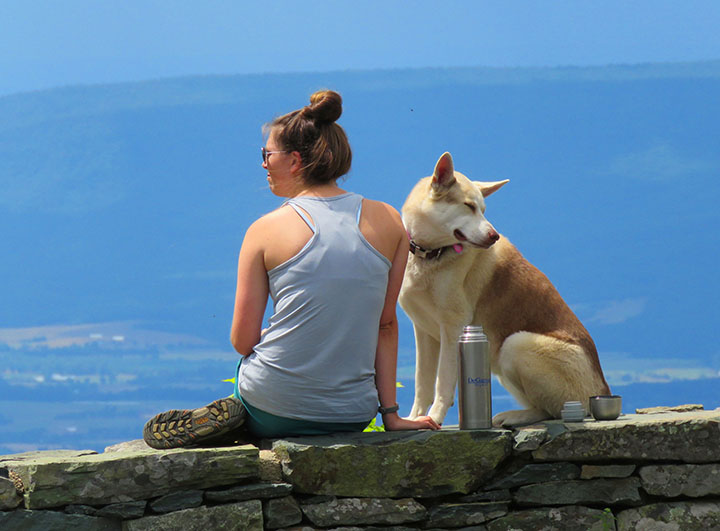
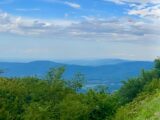
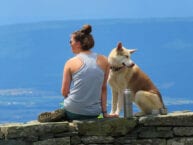
A girl and her dog enjoying the view of Shenandoah Valley from the Franklin Cliffs Overlook in Shenandoah National Park: Glynn Wilson
By Glynn Wilson –
COULTERVILLE, Calif. – As international travel and tourism has dropped significantly in the United States over the past year due to Trump administration trade and other unpopular policies, the administration just announced a major hike in fees for foreign travelers at America’s most visited National Parks that could cause another economic blow to the national economy and America’s reputation around the world.
Foreign tourists will be required to pay a $100 surcharge to visit the country’s most popular national parks under a new plan announced Tuesday by the Department of the Interior.
According to breaking news reporting from the New York Times, this so-called “America First” approach to public lands has fueled a debate among environmentalists, members of Congress and businesses that benefit from international tourism around the parks.
Supporters of the fee increase say they could generate hundreds of millions of dollars that could be used to repair deteriorating roads and buildings at parks across the country. Critics say the charges could prompt international visitors on a tight budget to skip the nation’s natural wonders, worsening what is already a decline in foreign tourism.
Visitors to about 100 national parks pay fees ranging from $10 per person to $35 per vehicle, with annual and lifetime senior passes costing a standard $80. Under the current fee structure, there is no differentiation based on citizenship or residency.
The Interior Department said that the new $100 fee would come on top of the daily entrance fee for foreign visitors to the 11 most popular national parks, including Acadia, Bryce Canyon, the Everglades, Glacier National Park, the Grand Canyon, Grand Teton, Rocky Mountain, Sequoia and Kings Canyon, Yellowstone and Yosemite and Zion National Parks.
Annual passes for foreign visitors to those parks will go up to $250 beginning on Jan. 1, according to a news release from the Interior Department. The price for U.S. residents will remain $80 and all passes, including military and senior passes, may now be ordered in digital format online.
“President Trump’s leadership always puts American families first,” Interior Secretary Doug Burgum said. “These policies ensure that U.S. taxpayers, who already support the National Park System, continue to enjoy affordable access, while international visitors contribute their fair share to maintaining and improving our parks for future generations.”
Foreigners authorized to live in the United States will not be charged the new fees, although verifying this information could be a bureaucratic nightmare for National Park Service Rangers.
Jim Schaberl, who retired last year as division chief for natural and cultural resources at Shenandoah National Park in Virginia, said park rangers would be required to scrutinize passports.
“This whole business of determining who’s a citizen at park entrance gates opens up a whole can of worms that isn’t fair for rangers,” he said.
The higher fees could price out international students as well, he said.
“A lot of students are staying at hostels and trying to travel more cheaply, so maybe this is a barrier for them. And that’s a shame because then they won’t see what America has to offer.”
The increased pricing comes as more and more international tourists are choosing to stay away from the United States, according to the Times. Canadians, who have historically formed a large share of international travelers, are continuing to boycott American destinations amid President Trump’s trade war and harsh rhetoric directed at Canadians. Canadian travel to the United States has declined every month since Trump’s second term began.
The National Park Service, which has been operating under the Trump administration without a permanent leader, is already struggling to maintain the parks in the aftermath of deep staffing cuts by the Trump administration and DOGE, led at first by Elon Musk. The agency has lost nearly a quarter of its work force since Trump took office, and routine tasks like cleaning and stocking the bathrooms in park facilities have gone undone in places. Fewer rangers are giving tours and programs, and many visitor centers still operate with reduced hours.
Mabry Word, the co-owner of Bryce Canyon Scenic Tours and Shuttle Service, which offers bus, biking and hiking tours of Bryce Canyon and Zion in Utah, called the new fees a “surprise attack” on his small family-owned company, which has customers from all over Europe and Asia.
“There is a chunk of our clientele who are just barely able to scrape together enough money for the tour, and now they may opt out,” Word said. “The families from Europe are not going to want to pay for their kids, but they’re not going to leave their kids home, either.”
Around 14.6 million foreign tourists visit at least one national park or national monument each year, according to 2018 estimates by the U.S. Travel Association. As 2026 will be America’s 250th birthday, tour companies had been hoping the occasion would attract even more foreign visitors to some of the country’s most popular sites.
Asked about these criticisms, Elizabeth Peace, a spokeswoman for the Interior Department, said in an email, “The updated fee structure reflects the significant investment made by U.S. taxpayers to support these public lands, while still welcoming international visitors who help sustain local economies and share in our nation’s natural and cultural heritage.”
A recent study commissioned by the Property and Environment Research Center, a conservative research group, found that a $100 surcharge for international visitors to Yellowstone alone could generate $55.2 million in new revenue, enough to cover the park’s annual maintenance costs of $43 million. At the same time, the study found that the new fees could lead to the loss of around 57,000 international visitors a year.
Several Republican members of Congress have introduced a bill that would codify the fee changes into law.
“Many countries around the world charge tourist fees to visit attractions that are run and maintained by their taxpayers; it’s common sense that America should do the same,” Senator Tim Sheehy, a Montana Republican and sponsor of the measure, said in a statement on Tuesday.
Other countries have indeed imposed surcharges on international visitors to some of their most treasured parks and nature preserves. Ecuador charges international tourists $200 to enter Galápagos National Park, while Ecuadorean adults pay $30. Rwanda requires nonresidents to buy a $1,500 permit to see gorillas in Volcanoes National Park, while Rwandan citizens pay about $21.
The Interior Department’s announcement also said that U.S. residents would not have to pay to visit national parks on six federal holidays, as well as on the birthday of the National Park Service, Aug. 25, and on June 14, Flag Day.
According to reporting from the Associated Press, as part of the changes, which are set to take effect Jan. 1, foreign tourists will also see their annual parks pass price jump to $250.
Burgum said in a post on the social platform X that the changes make sure U.S. taxpayers who support the park service “continue to enjoy affordable access, while international visitors contribute their fair share to maintaining and improving our parks for future generations.”
The announcement follows a July executive order in which President Donald Trump directed the parks to increase entry fees for foreign tourists.
According to National Parks Conservation Association spokesperson Kati Schmidt, there’s a lot to unpack in this announcement, especially “many questions on its implementation – all which NPCA will raise with the Department of Interior,” she said.
National parks and monuments see more than 14 million international visitors a year. Yellowstone reported that in 2024, nearly 15 percent of its visitors were from outside the country, which was down from 30 percent in 2018.
For more information on visitation to national parks, see this comprehensive report from 2022.
National Park Service Highlights Less Famous Parks in Reporting Annual Visitation Numbers
More Photos
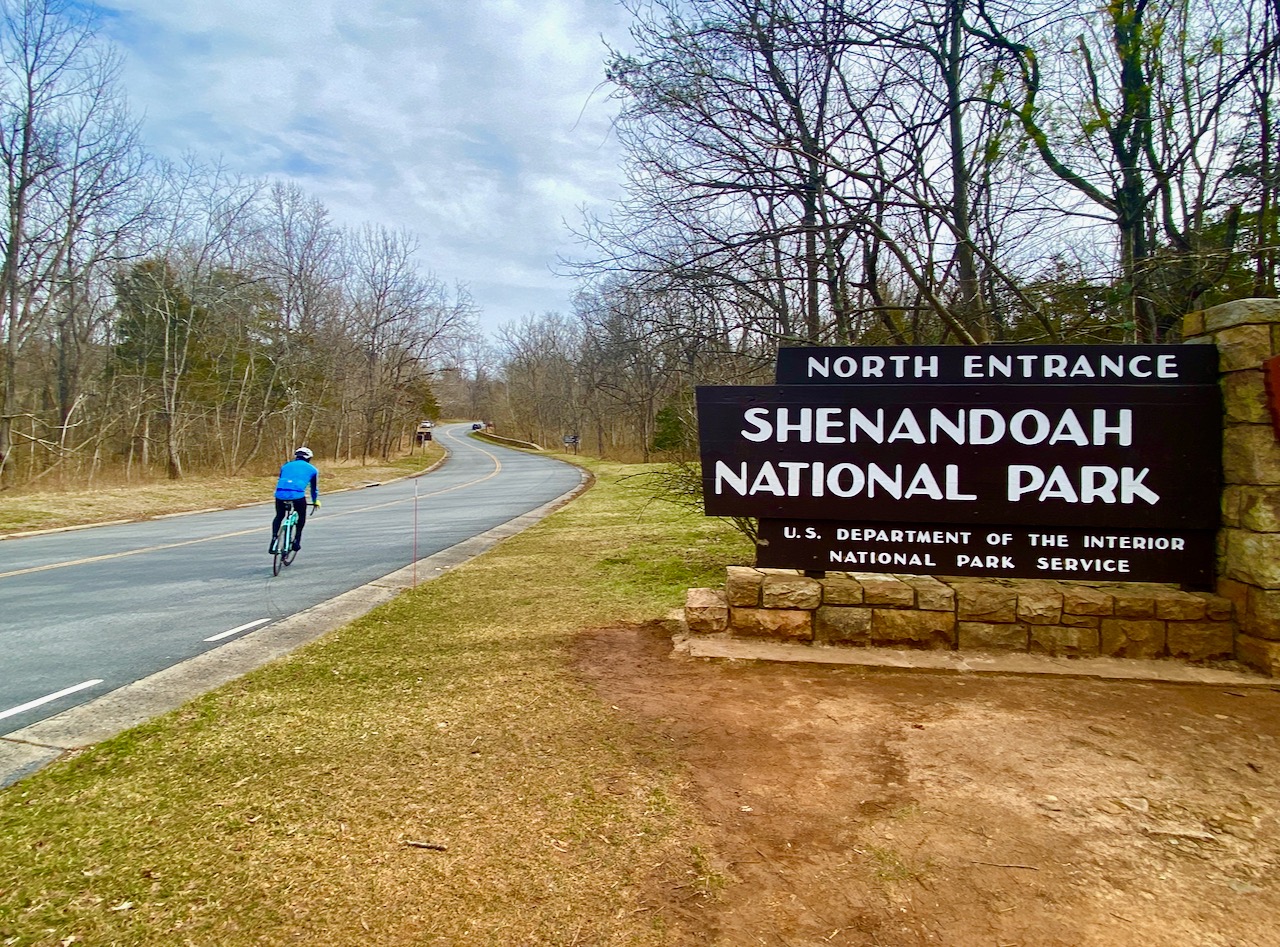
Rolling out and up the mountain into Shenandoah National Park on a stellar winter day. It’s a seven mile climb to the top of the first major ridge, right before the straight downhill to Black Bear Curve: Glynn Wilson
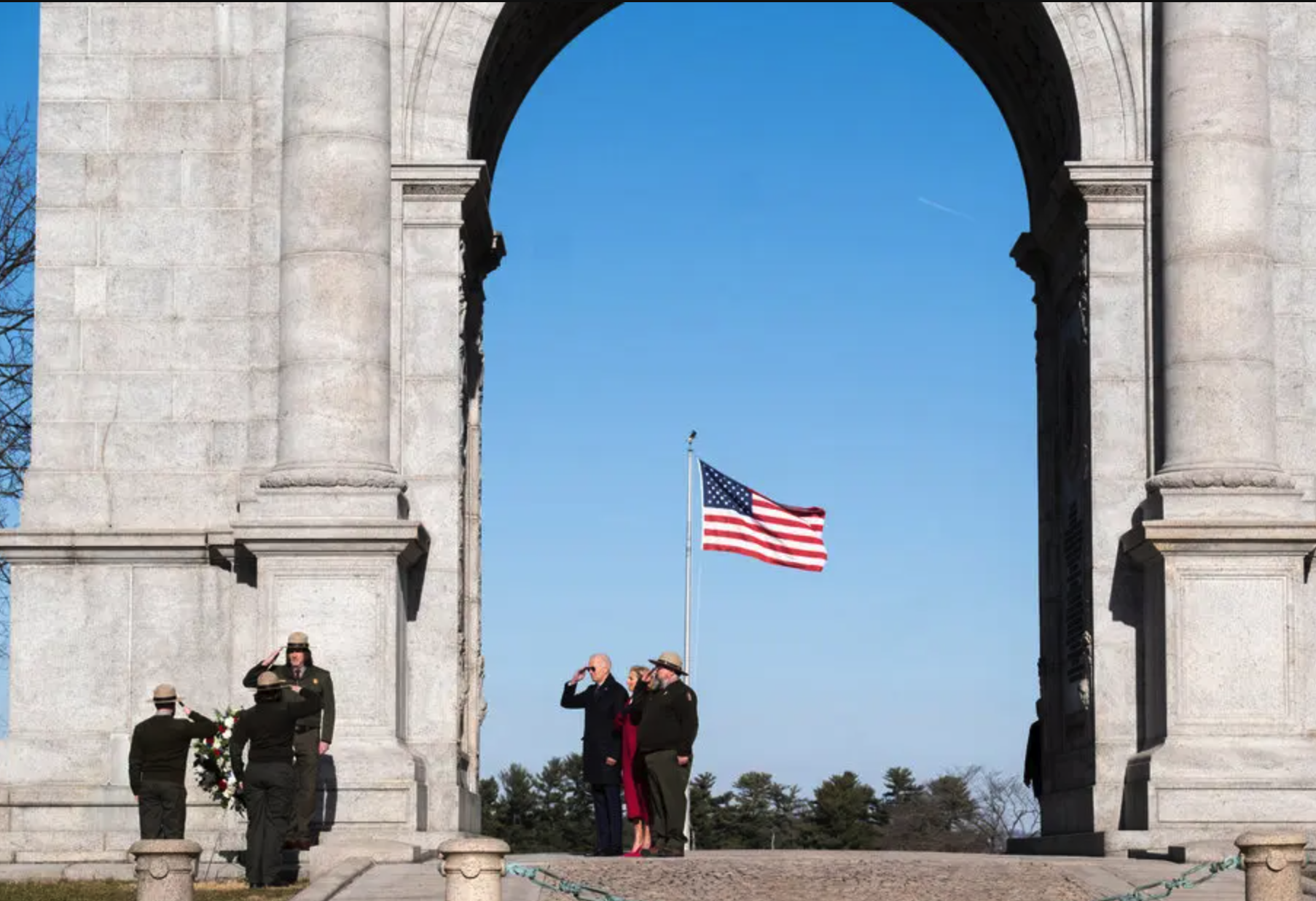
President Joe Biden and first lady Jill Biden participate in a memorial wreath ceremony at the National Memorial Arch at Valley Forge National Historic Park in Pennsylvania on the eve of Jan. 6, 2024: NAJ screen shot
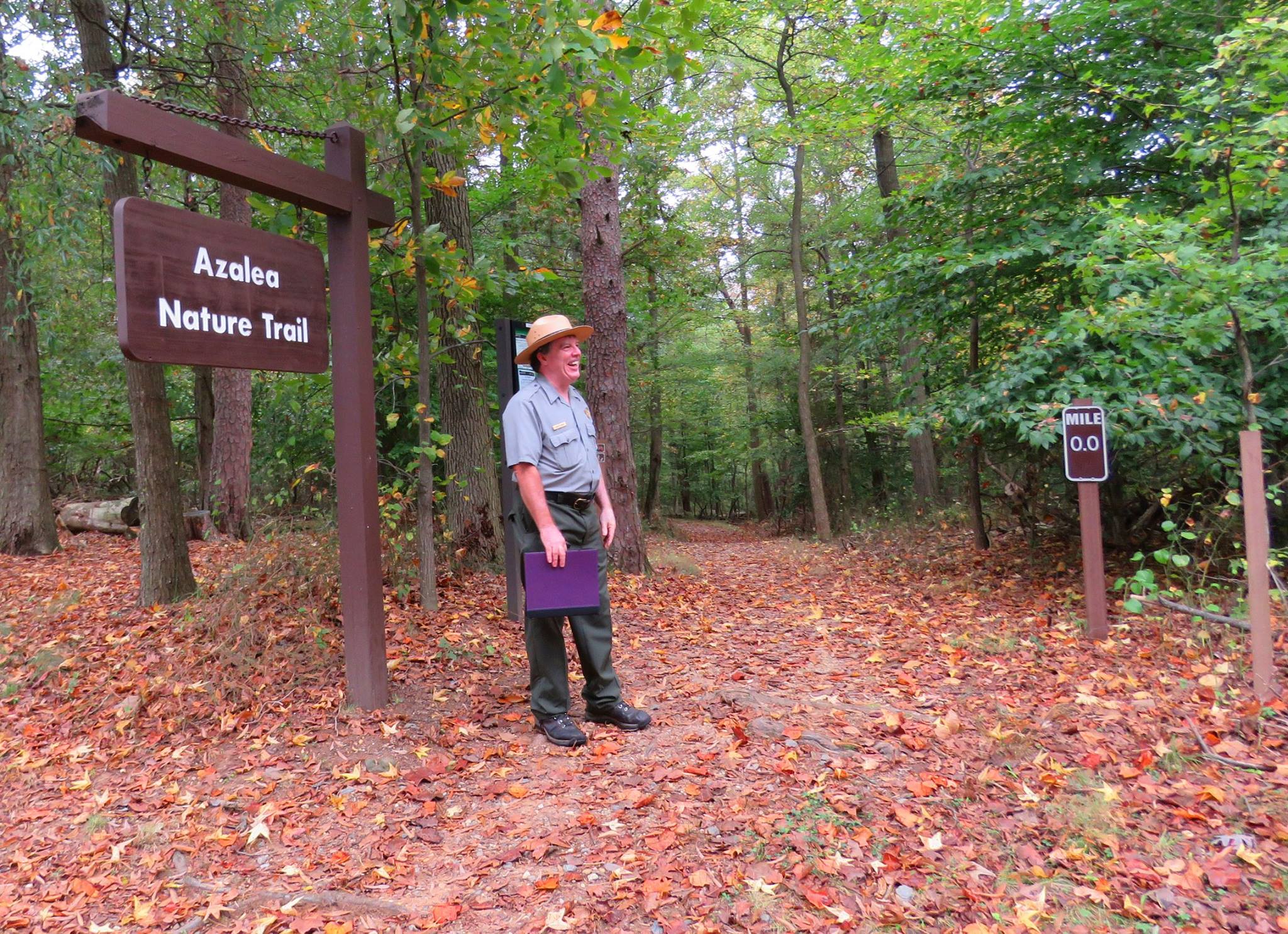
National Park Service Ranger Kevin Barry, Greenbelt National Park: Glynn Wilson

Ryan Hichens and Katelin tell their Nomadland story in Shenandoah National Park: Glynn Wilson
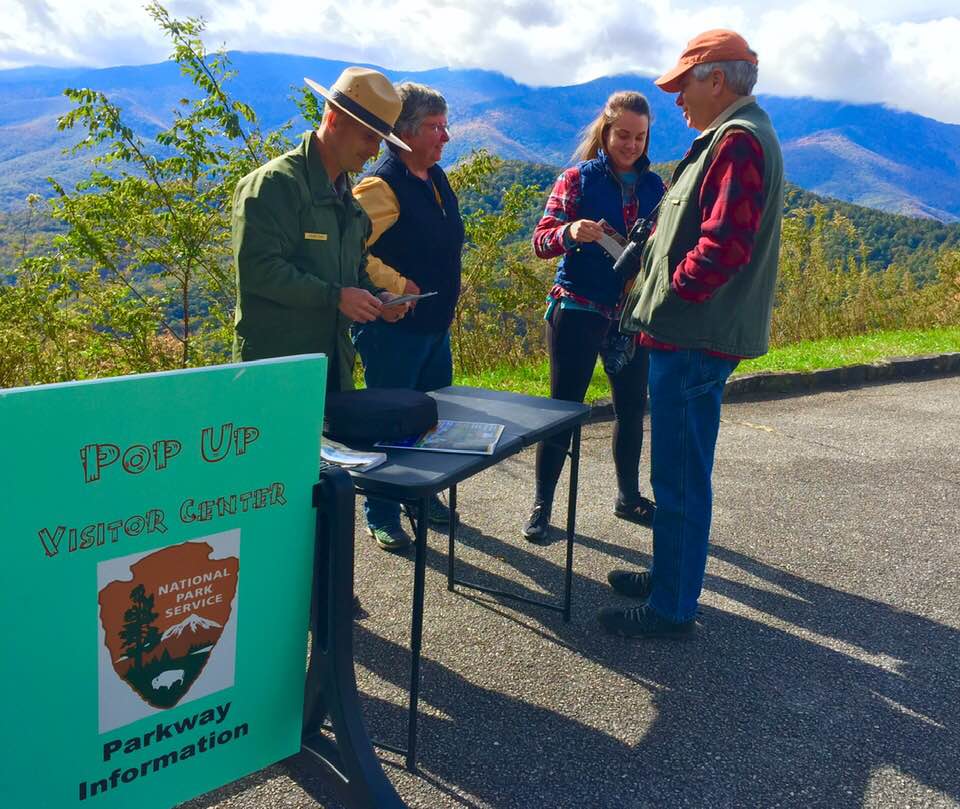
A pop up visitor center along the Blue Ridge Parkway, the most visited of National Park Service sites in the country with more than 16 million visitors each year: Glynn Wilson
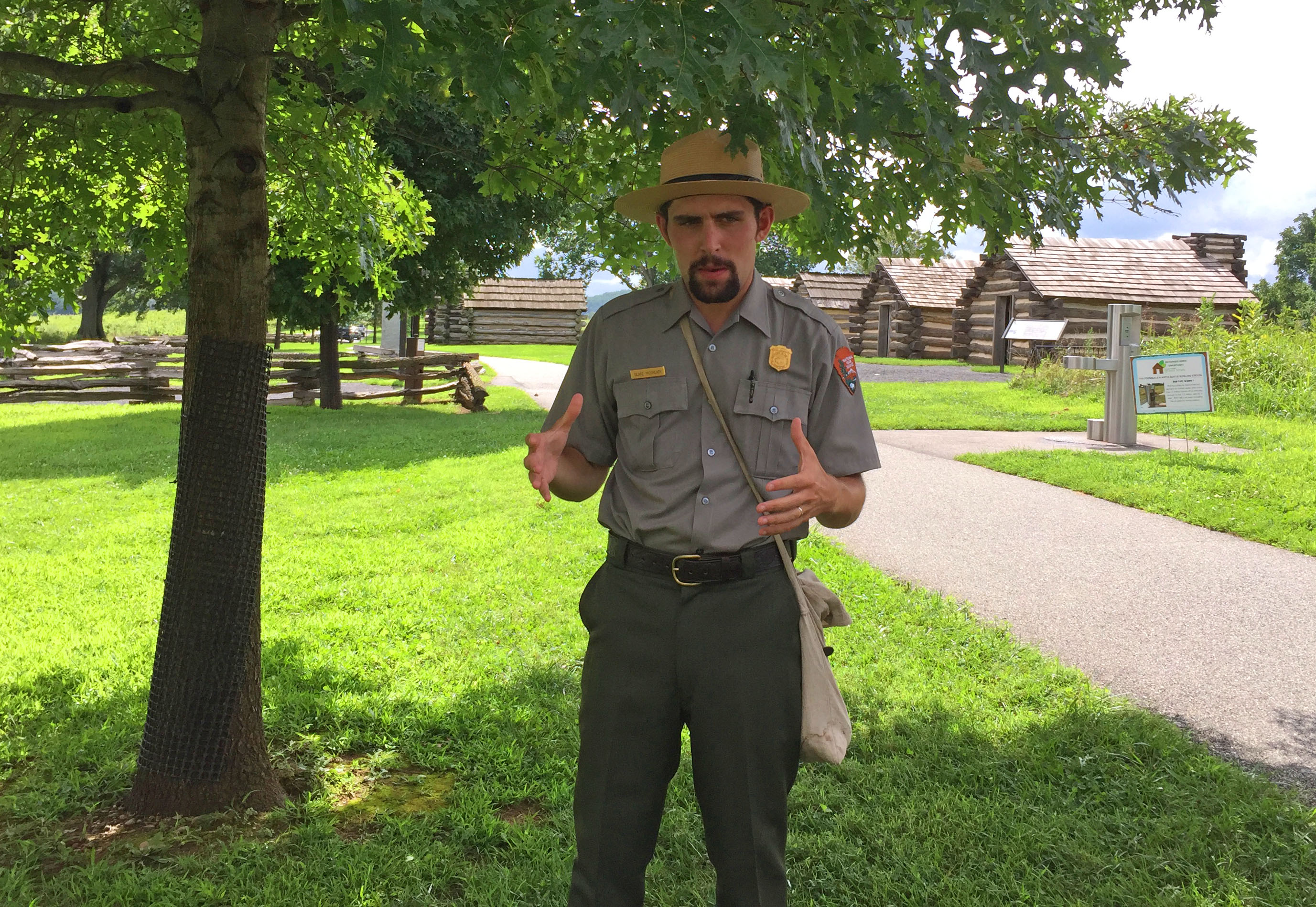
National Park Service Ranger Blake McGready on a walking tour of the Valley Forge encampment with some replicas of the huts the Continental Army built to survive the winter of 1777-78 in the background: Glynn Wilson
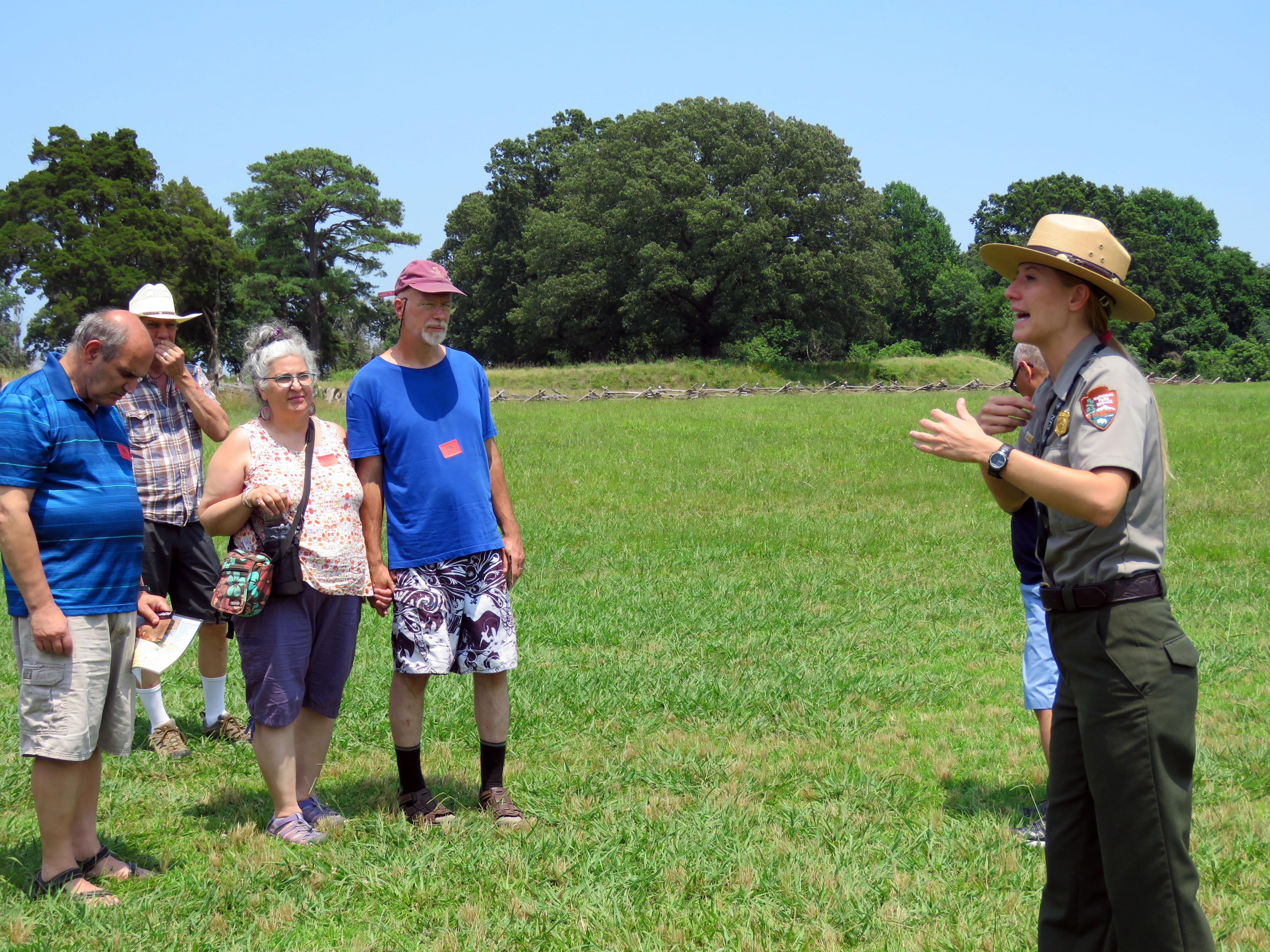
A National Park Service ranger during a program explaining the events that occurred in the summer and fall of 1781: Glynn Wilson
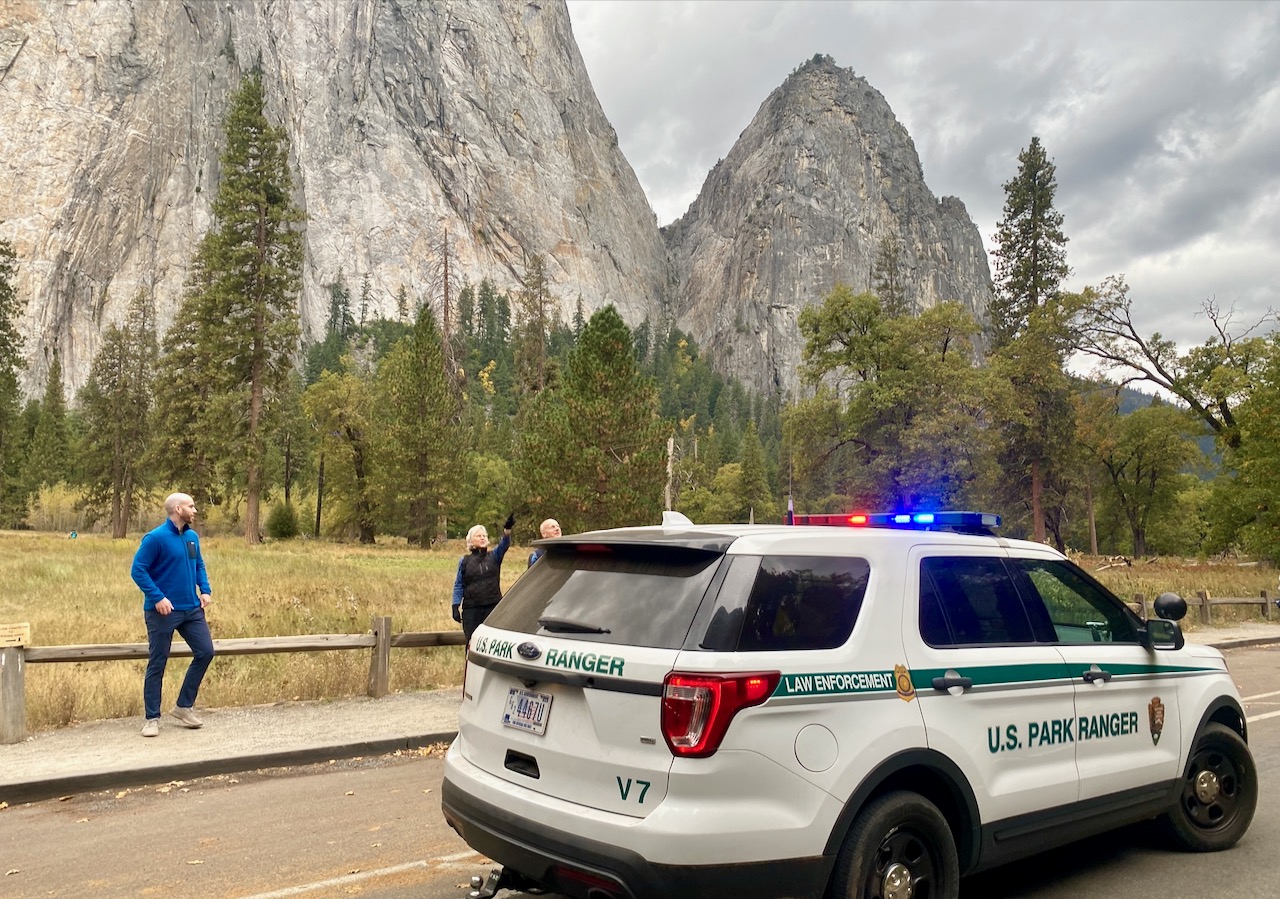
A National Park Service Law Enforcement Ranger (LE) managing the crowd watching the climbers ascend on El Capitan: Glynn Wilson




Gotta love and support our 1%! At least Marie Antoinette threw her French poor cake crumbs, we don’t even get that!